Wednesday, November 22, 2006

Still More Woodpeckers - The Red-Bellied

Okay, we discussed visits to the Habitat by a pair of pileated woodpeckers and many downy woodpeckers. So, let’s talk about the Red-Bellied Woodpecker.

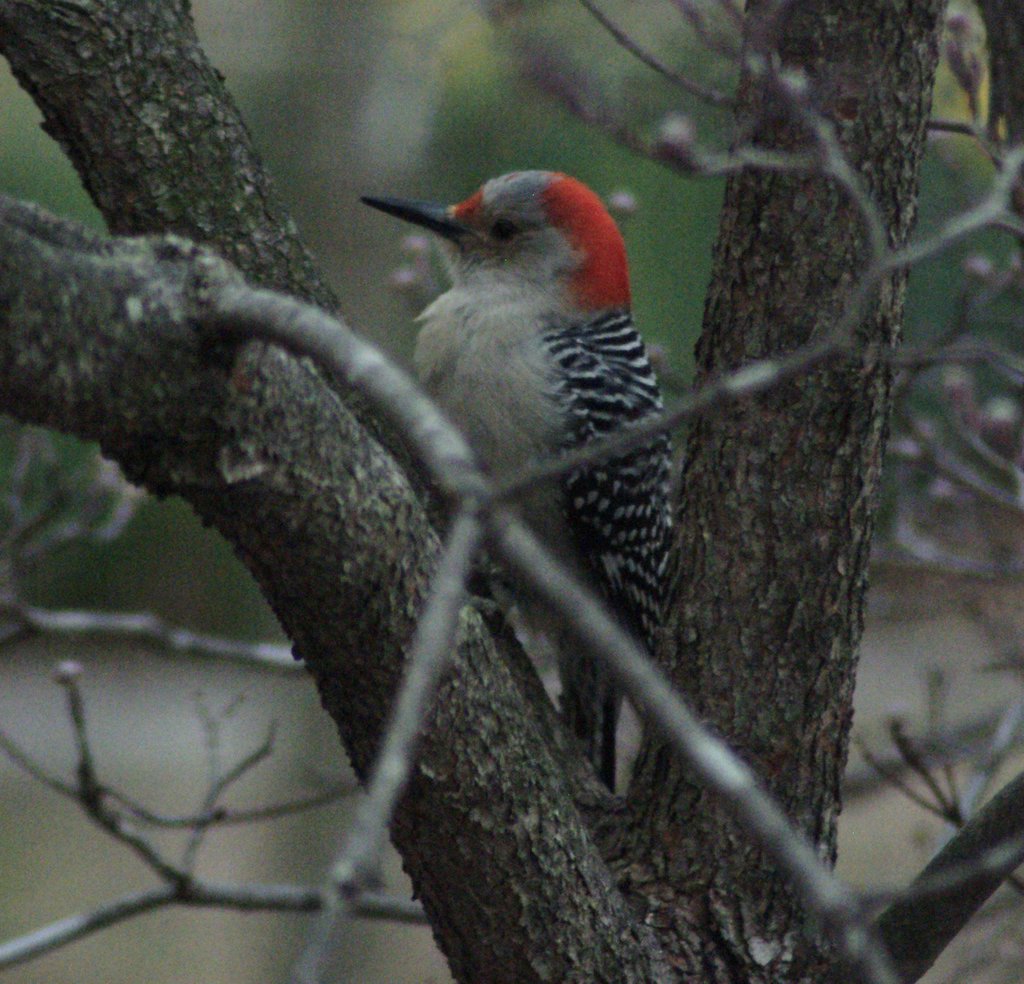
This was the first woodpecker to be seen on a continuing basis in the Habitat. This first photo shows the red-bellied in his classic front-facing-tree-front pose. This woodpecker enjoys moving side to side around a tree trunk, which gives the impression that he is playing hide and seek.

The second photo offers proof that his woodpecker also will perch on a branch (a habit that we have seen with the downy and the flicker also).

For a long time, only males were seen. The males (seen in the first two photos) have a completely red head. The female, shown in the third photo, is similar to the male, except that she has a gray patch on the top of her head.

The fourth photo shows that the red-bellied woodpecker in deed does have a red belly. As noted at http://www.enature.com/home//, their “reddish patch on lower abdomen is seldom visible in the field.” In addition to frequently visiting the suet feeder, they will occasionally visit the sunflower seed feeder.
Posted by Picasa

Tuesday, November 21, 2006

More Woodpeckers - The Downy

First, an update. The pileated woodpecker that was seen for the first time in the immediate Habitat area, was seen a second time. This is a great sign as we might continue to see them in the Habitat.

Second, more woodpeckers. In addition to the pileated, there are three kinds of woodpeckers that are common in the Habitat. By far the most common, one that you will see every few hours, is the Downy Woodpecker. In fact, in a previous post, I showed you a photo of one downy woodpecker just hanging on a porch window. In that post, I also showed you some traditional photos of the downy.

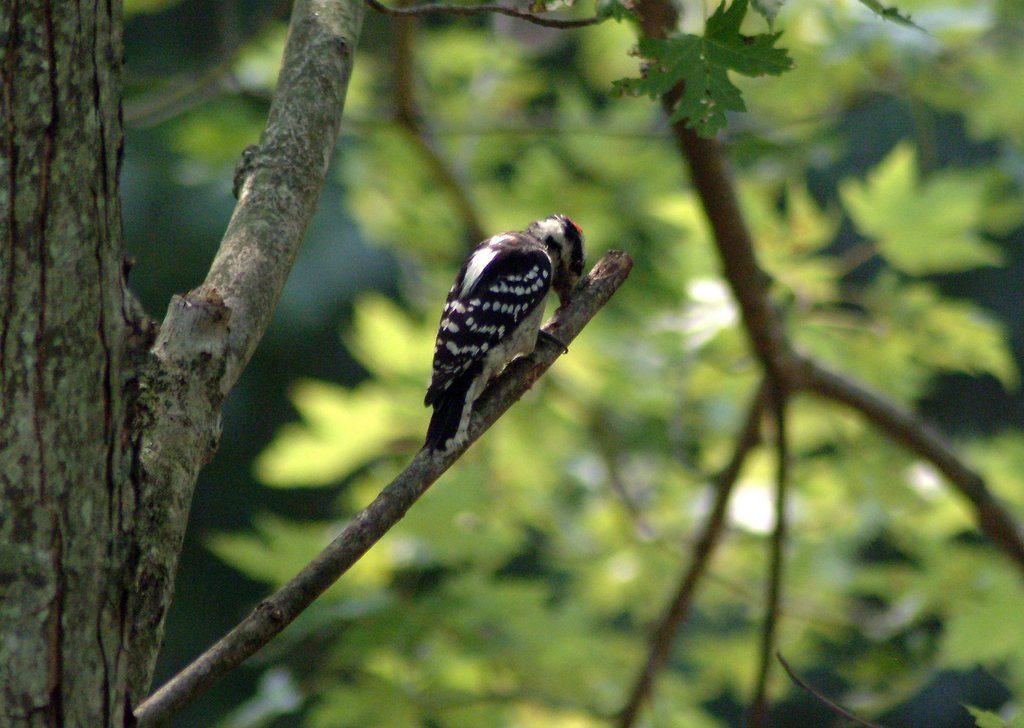
Here are four more photos, which are not the normal photo of a woodpecker with his back facing you and him hanging on a tree truck. (actually, the most common photo that I have of a downy is feeding at the suet feeder.) In the first photo, the downy is on a branch doing what he does best – extracting insects. This is a male as he has the red patch on the back of his head.

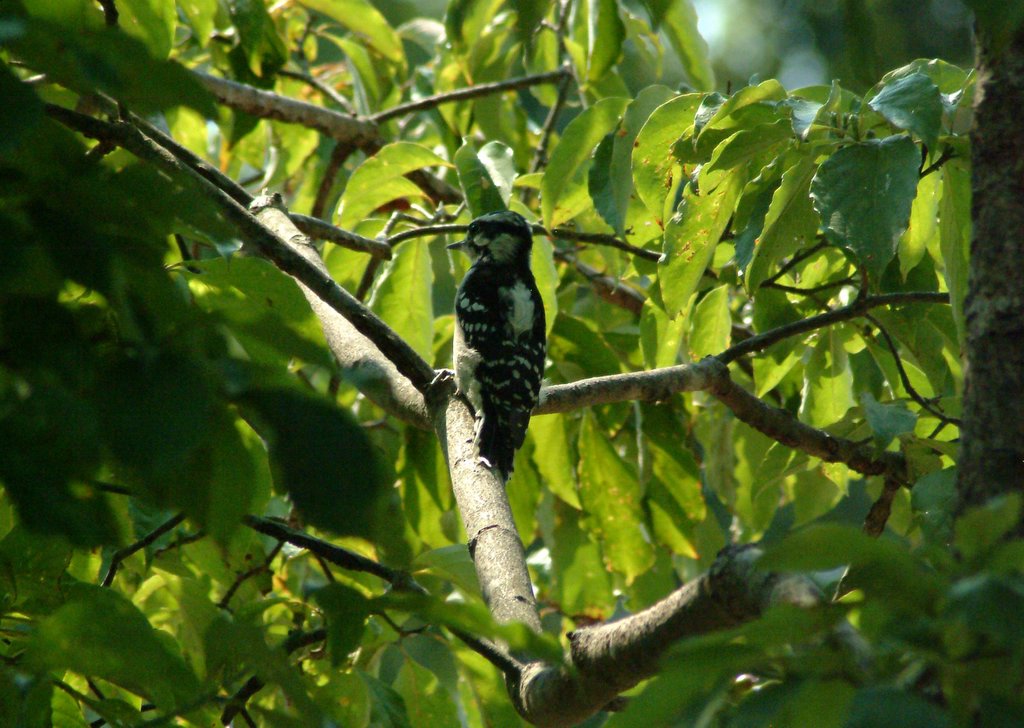
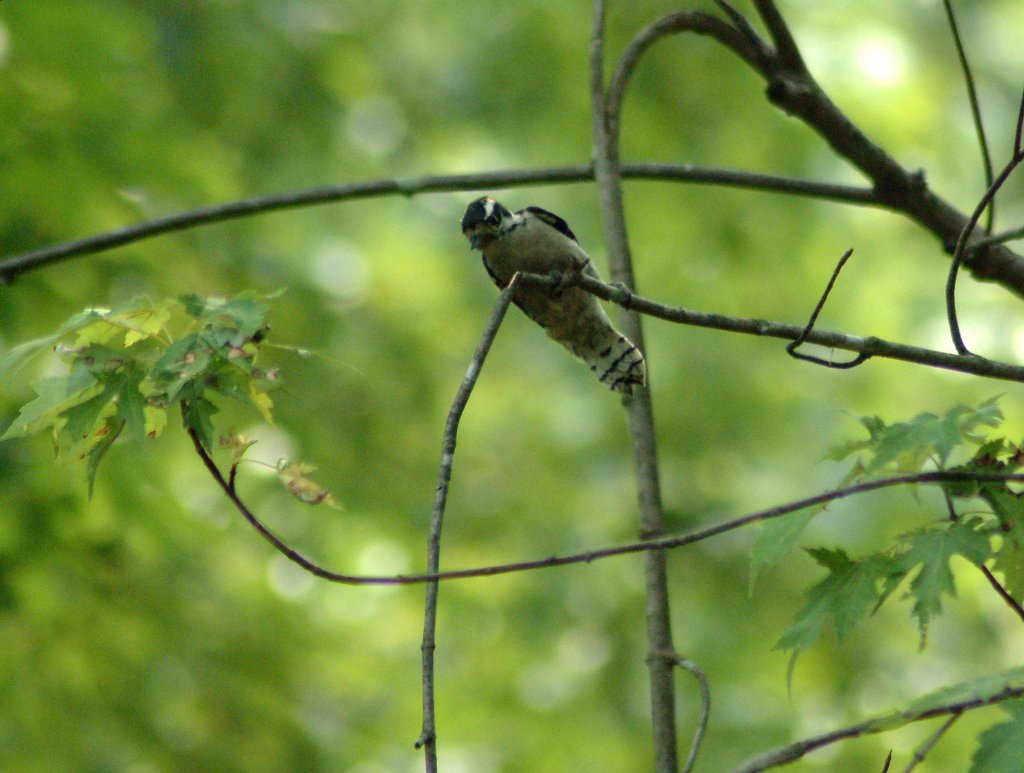
The second photo shows a female (no red patch) sitting on a branch. The third photo shows an interesting pose – one in which you can see the front, including the front tail feathers.

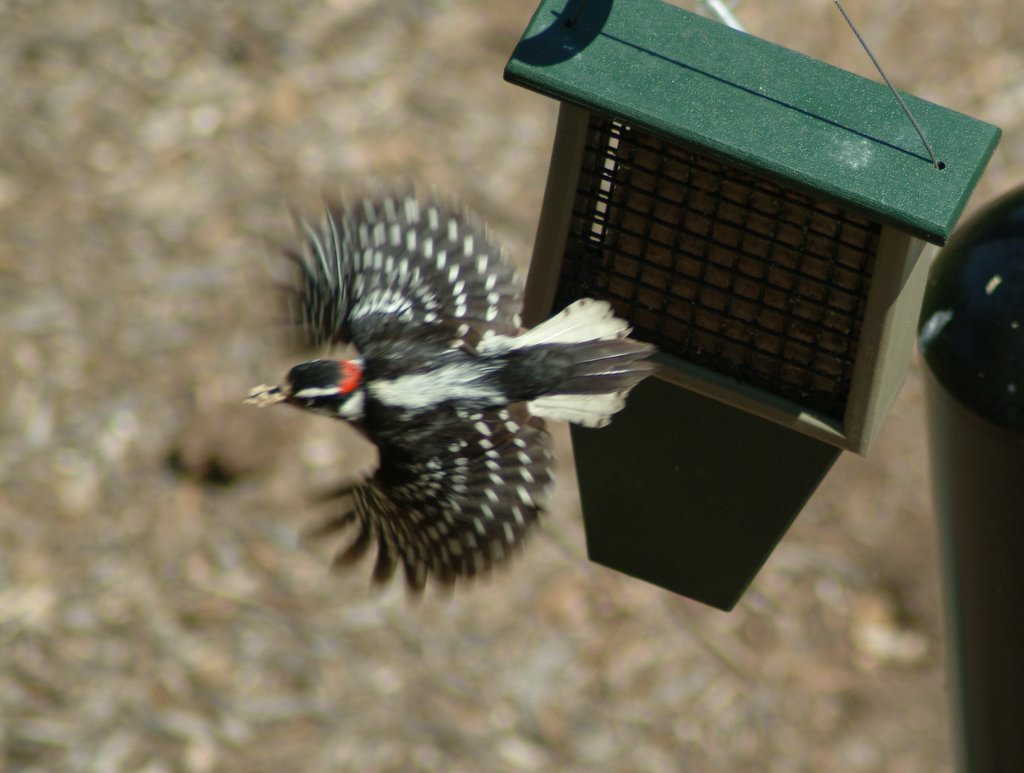
The fourth photo shows a downy in flight (leaving the suet feeder).

Still more woodpeckers in the next post. Posted by Picasa

Friday, November 17, 2006

First Time Visitor to the Habitat

This morning was the first time in a week that we have had clear, sunny skies. Also, the rain and wind of the last week have clear nearly all of the leaves out of the trees. The result? All of a sudden, you can see birds that were difficult to see previously.

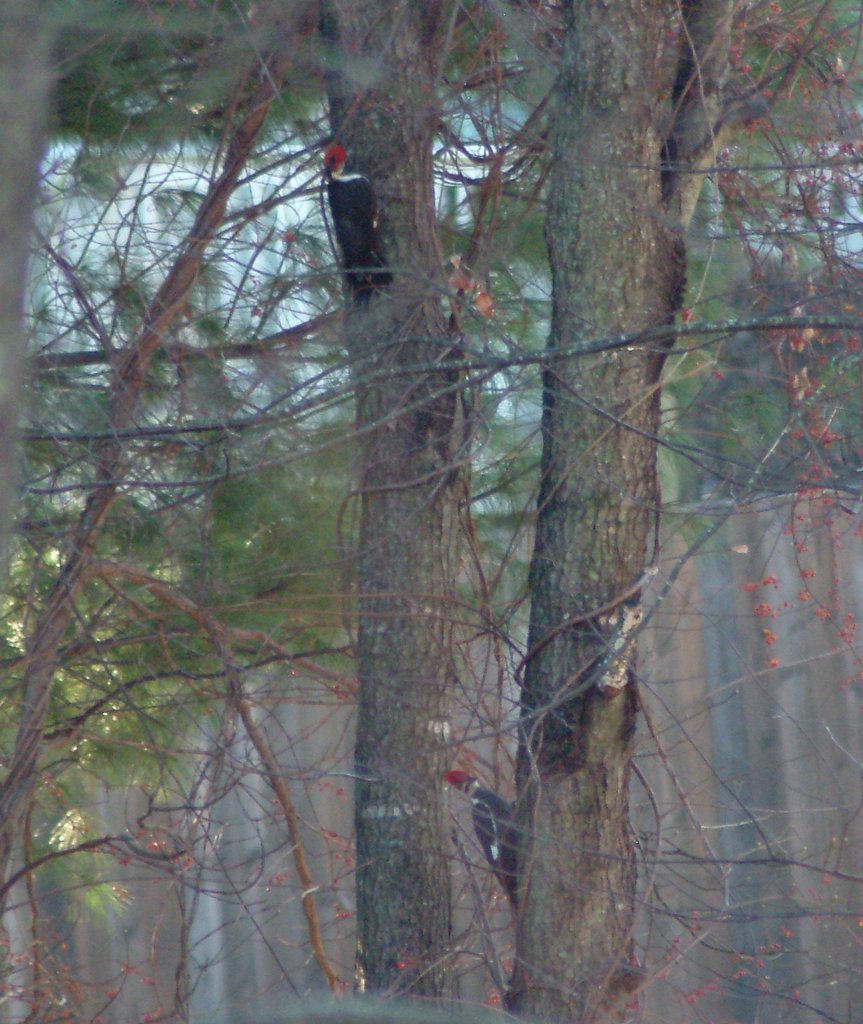
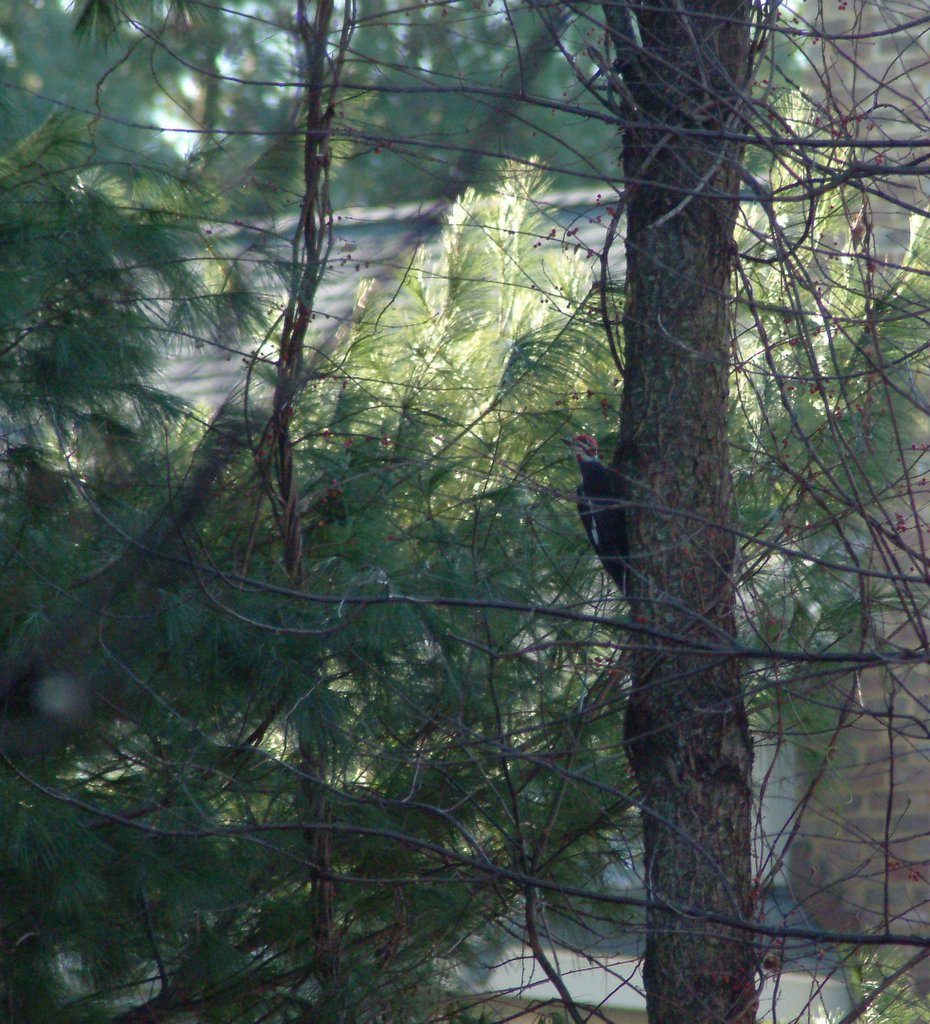
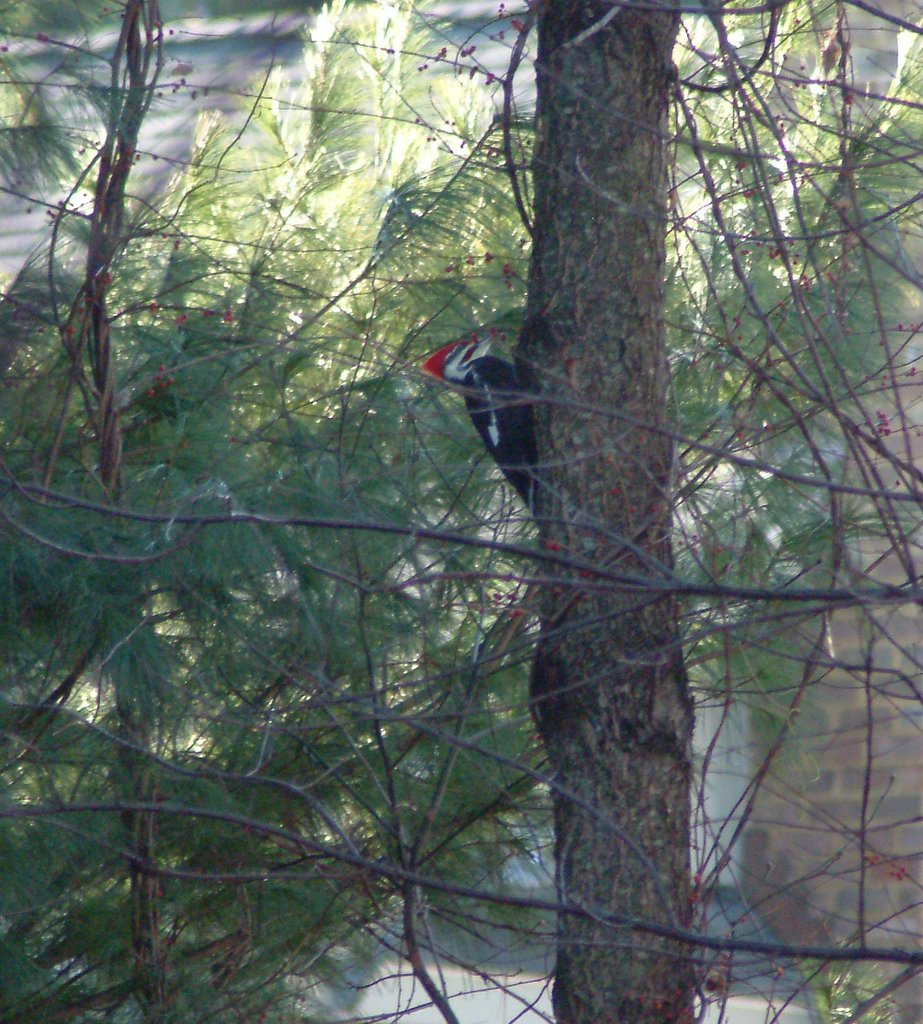
Nevertheless, it was a real surprise to see, not one, but a pair of Pileated Woodpeckers on the trunks of the maple and pine trees early this morning. The pileated woodpecker, a shy and difficult to observe even though he is crow-sized, can sometimes be seen deep in the woods adjacent to the Habitat, but this is the first time that one (or a pair) has been seen in the immediate backyard area.

They arrived very early, so I was barely dressed when I grabbed the camera and headed outside. I saw the pair, but it was only after I downloaded the photos that I realized that I had photographed both. Sorry, that I was unable to get them in flight as they are quite beautiful in flight.

Now, if we can only attract them to the feeders.
Posted by Picasa

Thursday, November 16, 2006

The Texas Great Blue Heron

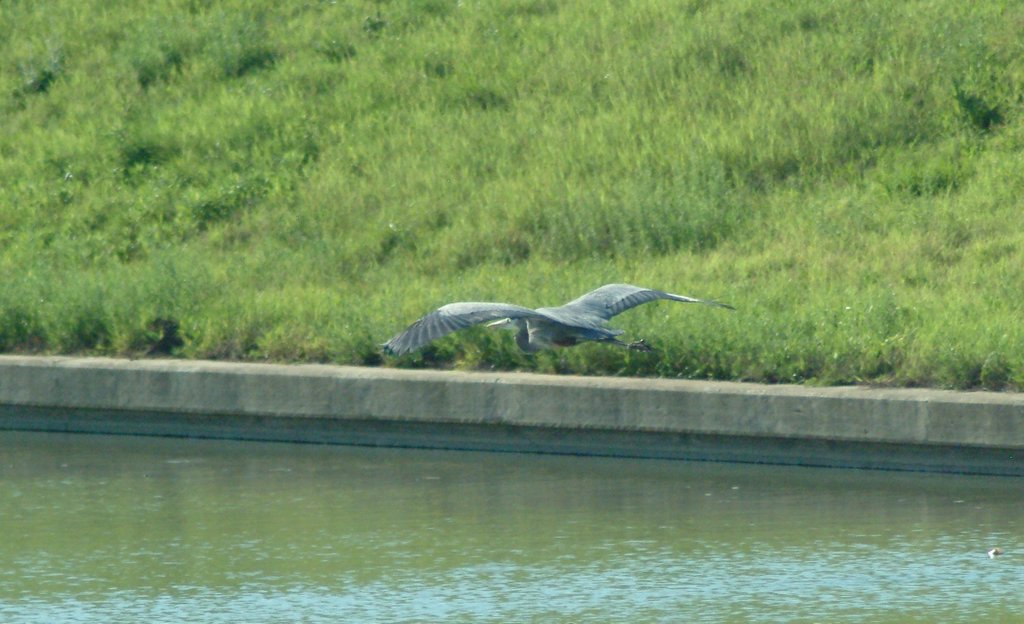
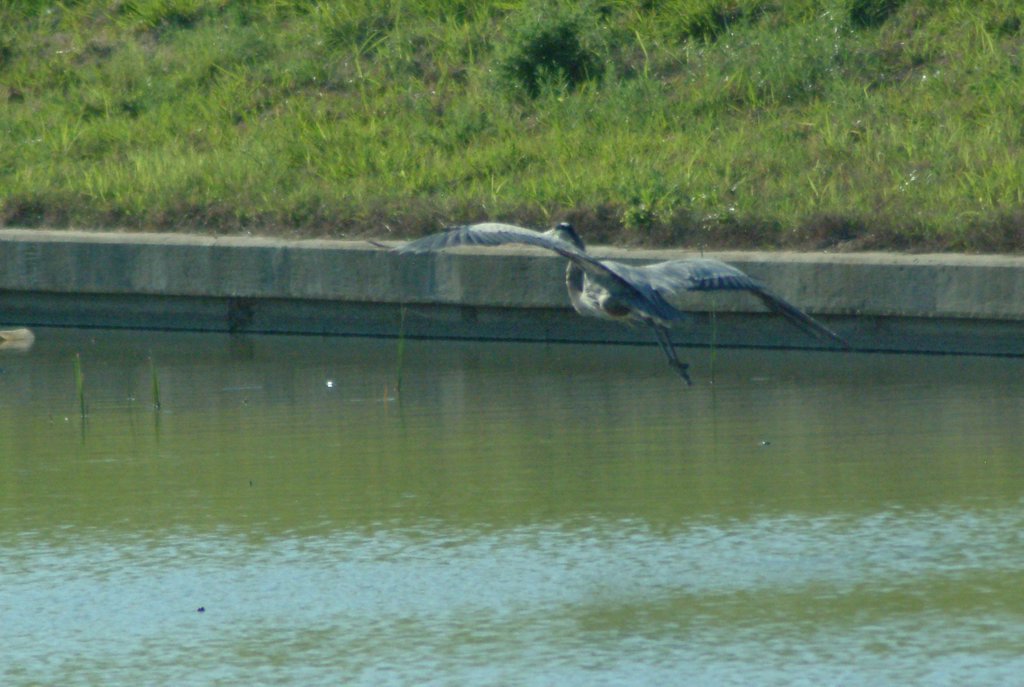
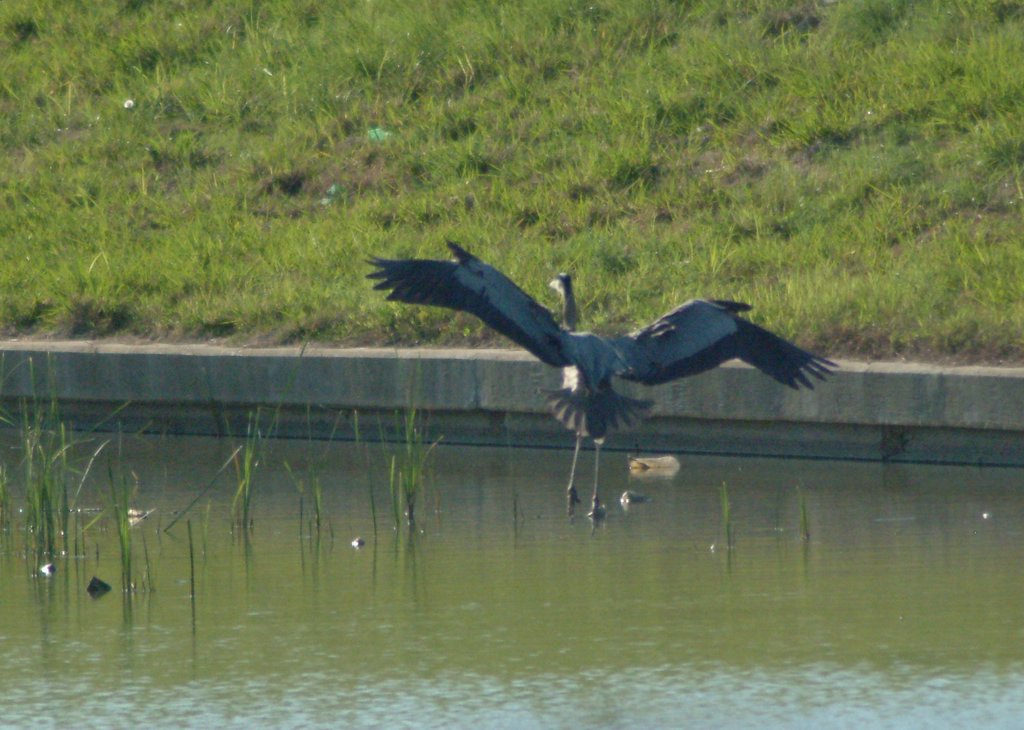
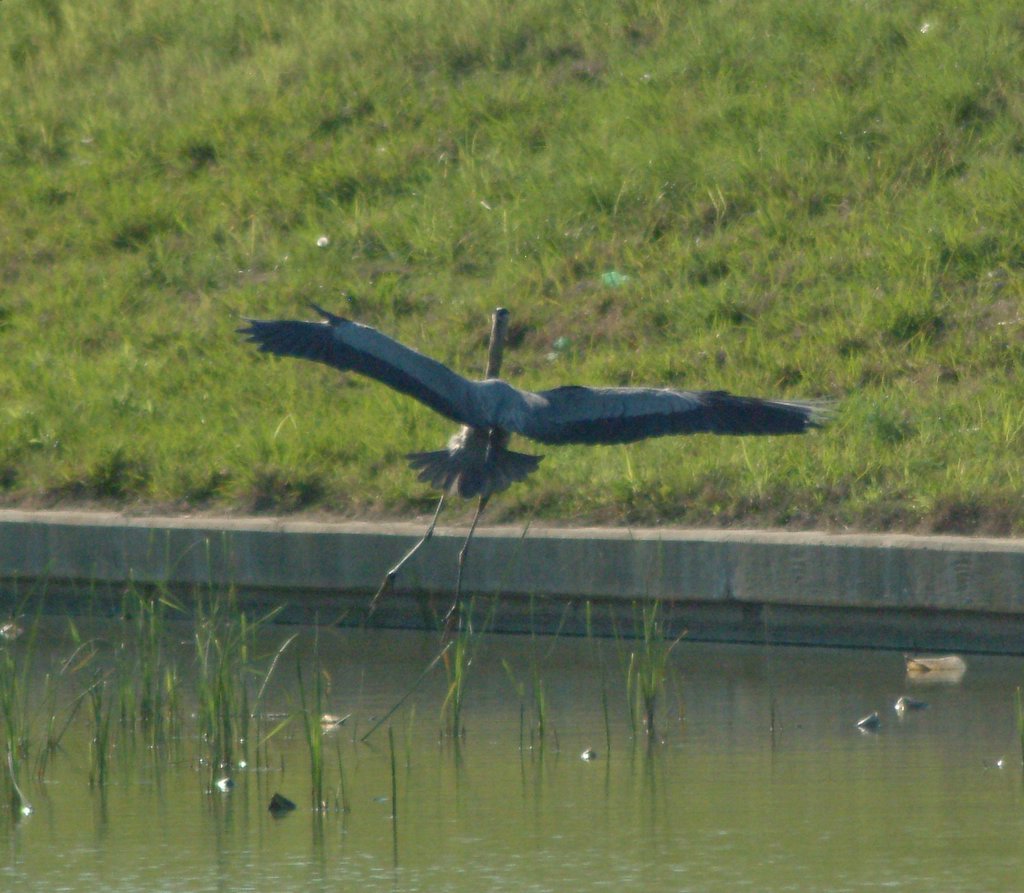
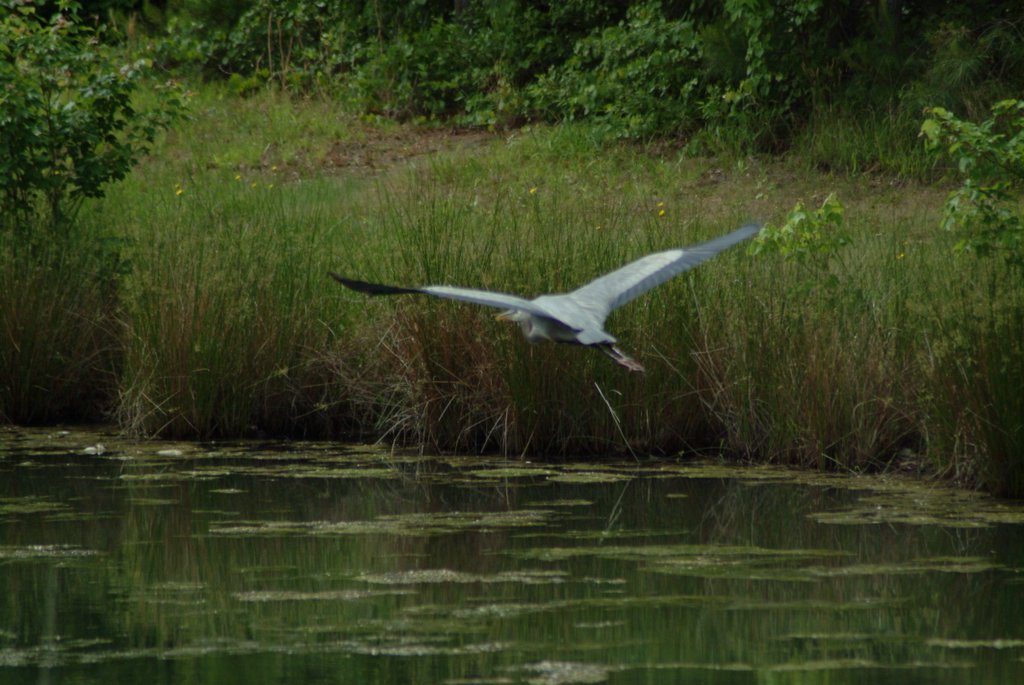
Yesterday’s post contained photos of a great blue heron taken in Newport News, Virginia. Less than a month earlier I ran into this great blue heron in a man-made stream in Lewisville, Texas (north of Dallas). I got this four photo sequence of him landing in the stream. His graceful in flight is certainly not matched by grace in landing. You would have to consider his landing almost comical.


Posted by Picasa

Wednesday, November 15, 2006

More Heron Photos from Newport News


A previous post showed photos of a Great Blue Heron that visited the Habitat and photos of a Tri-colored Egret taken during a trip to Tampa. The last year has produced a bumper crop of heron and egret photos.

Let’s continue with photos of another great blue heron taken during a May trip to Newport News, Virginia. This fellow was found in a stream of about 15 feet in width located behind a hotel that we were staying in. Of course, I spotted him from the window of a third floor room – grab the camera and run.

Fortunately, by the time I got to the stream, the heron was just taking flight. I got these photos. What an amazingly majestic bird, even when only slightly off the ground (or water). He continued to fly higher and higher, eventually lost to me beyond a stand of pine trees.
Posted by Picasa

Monday, November 13, 2006

More Photos from Amazing Sunday

I remain simply amazed from yesterday’s observation of 19 types of birds in two hours. Previously, I showed the red-tailed hawks and the flock of starlings. Here are four other types from this past Sunday. First, we have the turkey vulture flying just about at tree top – note the bare-skinned red head (click on the photo to see an enlarged view).

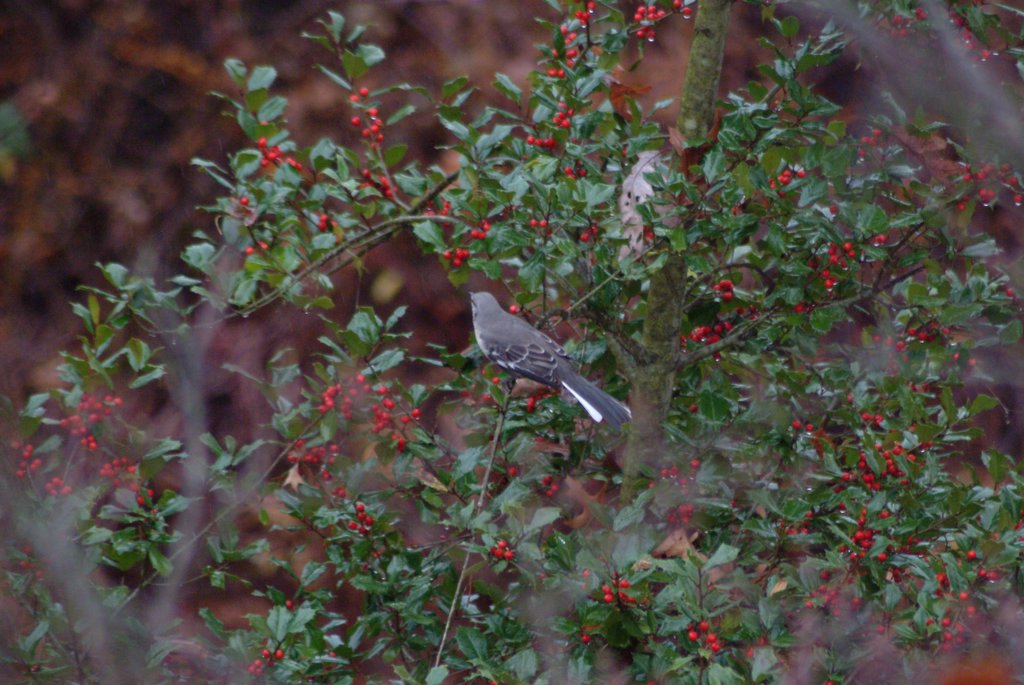
Second, we have the mockingbird perched in a holly tree (with the red berries, it's beginning to look a bit like Christmas).

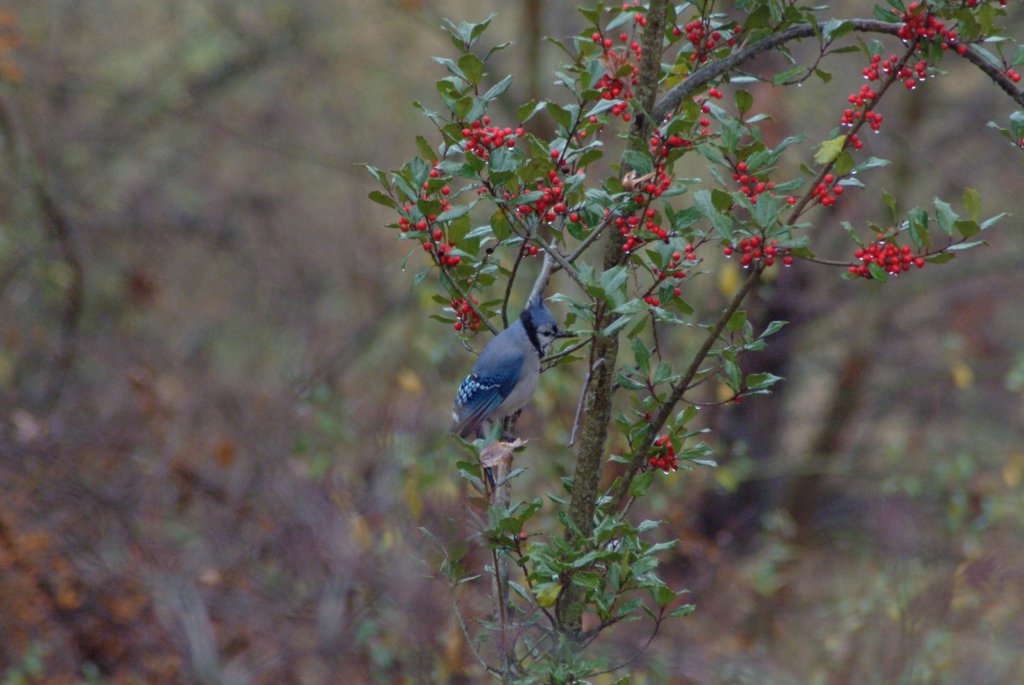
Then for color and in the same holly tree, we have a blue jay.

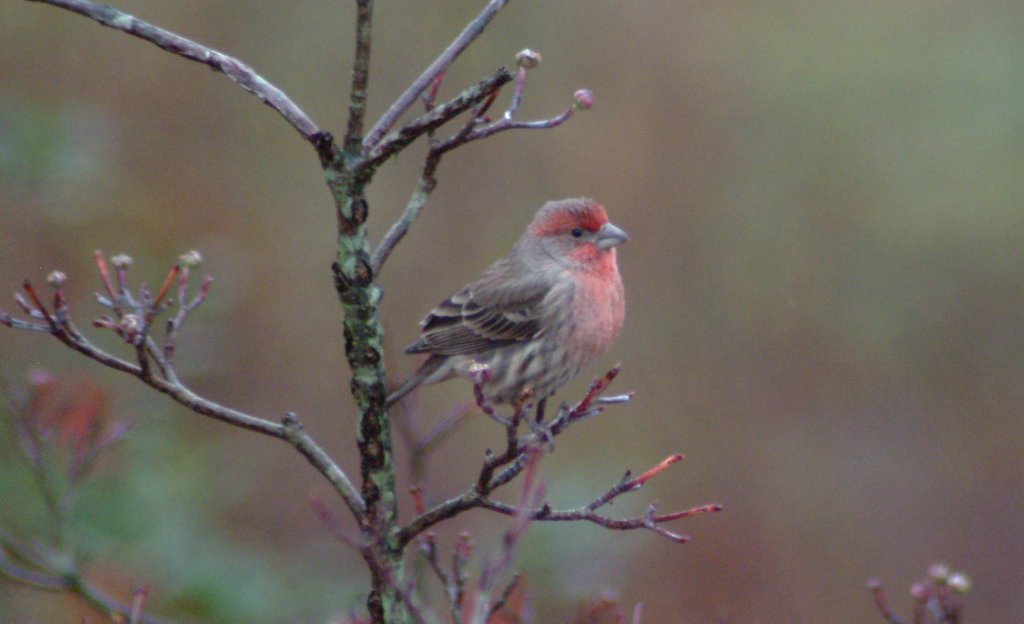
And last with subtle coloring, we have a house finch in the dogwood tree (you can see that next spring’s dogwood buds are already well formed).
Posted by Picasa

Sunday, November 12, 2006

Two Hawks, One Fox, and 19 Types of Birds in Two Hours

Overcast, rainy, winds gusts to 25 knots, daylight high temperature of barely more than 50 degrees. In short, a raw November day. And yet, there was more action in the Colvin Run Habitat today than on any warm, sunny day.

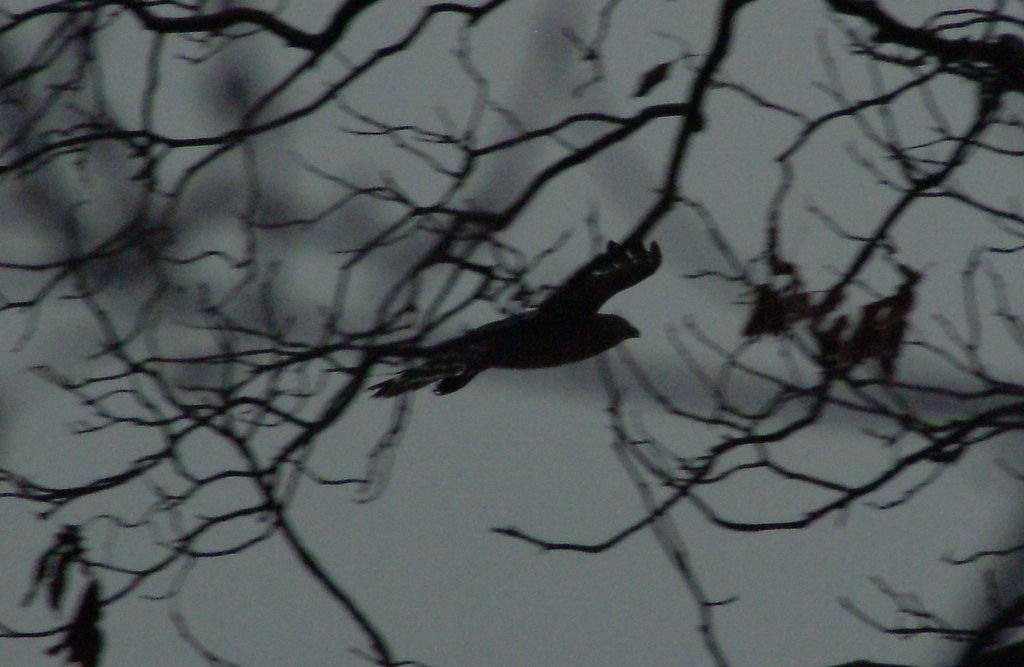
Things started by surprise. I walked out onto the back porch, only to observe not one, but two Red-trailed Hawks hunting. One of the hawks was momentarily on the ground; that quick he was airborne with something in its talons – from the victim’s size and tail hanging down, I am guessing a chipmunk. The second hawk stayed airborne and rose from about 10 feet to about 30 feet off of the ground. As the second hawk got above the trees, I took the first photograph. As you can see, I only captured its silhouette due to the extremely poor photograph weather.

Both hawks were quickly out of sight; I figured that they were gone for the day. But, within the hour they were both back, circling above the Habitat, which is when I got this second photograph. Later, one by one, they returned several times. They were very active just above the tree tops, and also flying through the Habitat below the tree level.

The Habitat sees many different types of birds during the year. However, in the two hour period that begun with the arrival of the red-tailed hawks, 19 different types of birds were observed (listed here from largest to smallest):
1. Red-tailed hawk
2. Turkey vulture
3. Crow
4. Blue jay
5. Red-bellied woodpecker
6. Mockingbird
7. Starling
8. Cardinal
9. Robin
10. Downy woodpecker
11. Nuthatch
12. Titmice
13. Dark-eyed junco
14. House finch
15. Savannah sparrow
16. White-throated sparrow
17. Wren
18. Goldfinch
19. Chickadee
This is an amazing collection. At times I needed to write down what I was seeing before I forgot. I photographed a number of these birds – I’ll share the photos later.

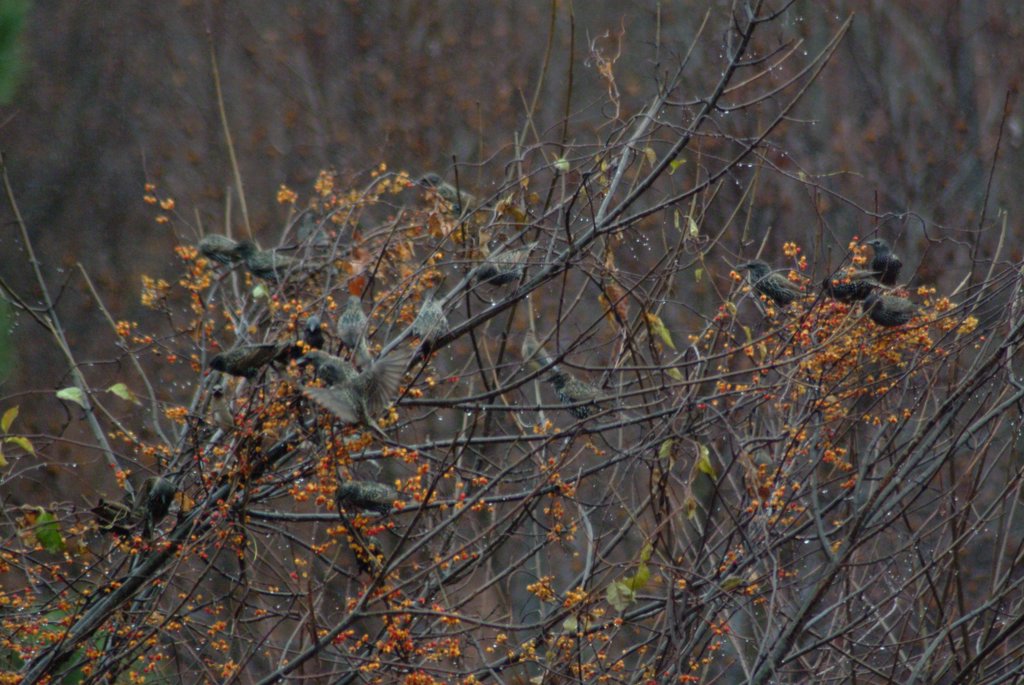
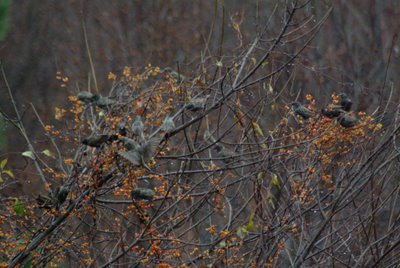
There were clearly some flocks of different types of birds that came through the Habitat during this two-hour period. In the third photo, you can see a flock of starlings. At the same time that the starlings were observed, robins and mockingbirds were also observed – both are unusual in the Habitat at this time of year.
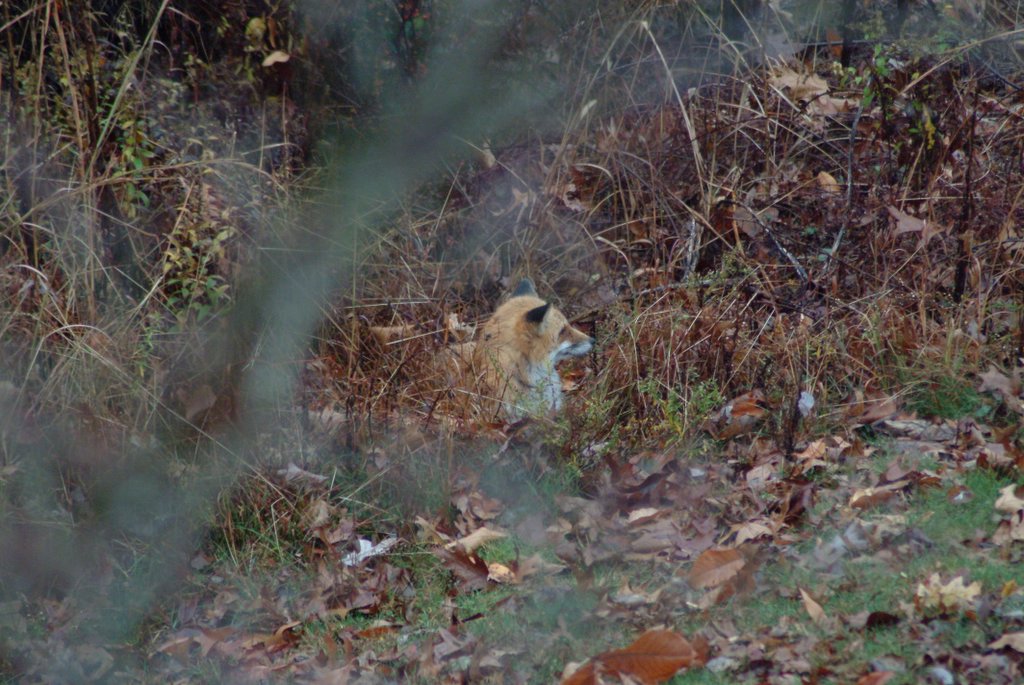
As normal, the ground was full of chipmunks and squirrels. And not to be left out, and as shown in the last photo, the fox showed up late in the afternoon and took his normal observation seat in the brush. He watched the squirrels a bit, looked around a lot, but within 30 minutes he decided to leave; I can only assume he was looking for a place out of the rain.

What a truly amazing day! Posted by Picasa