Saturday, December 02, 2006

Cooper’s Hawk Visits the Habitat

An exciting day – one of the hawks that I was previously unable to photograph showed up in the Habitat yesterday. In that previous post, I mentioned that the hawk perched on top of the feeder pole and was most likely a Cooper’s Hawk. Today, we first spotted him again perched on top of the sunflower seed feeder. And, there is no doubt that he is a Cooper’s Hawk (he was clearly crow sized, versus blue jay sized Sharp-shinned Hawk)

The hawk quickly left his perch on the feeder and flew 30 feet to the tall oak (as seen in all of these photos.
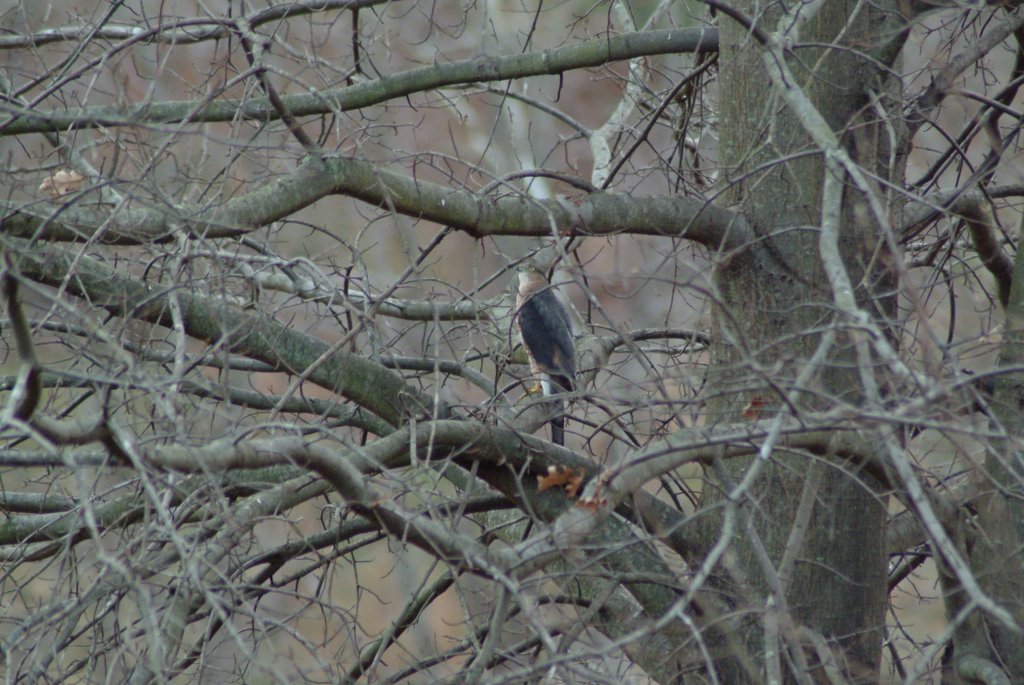

As you can see, the oak tree’s branches are quite dense. And yet, from such dense vegetation, the Cooper’s Hawk launches his attack at his prey. Dashing through this dense vegetation to catch birds is a rather dangerous lifestyle. A recent study found that 23 percent of all Cooper's Hawks examined had healed fractures in the bones of the chest, especially of the furcula or wishbone.
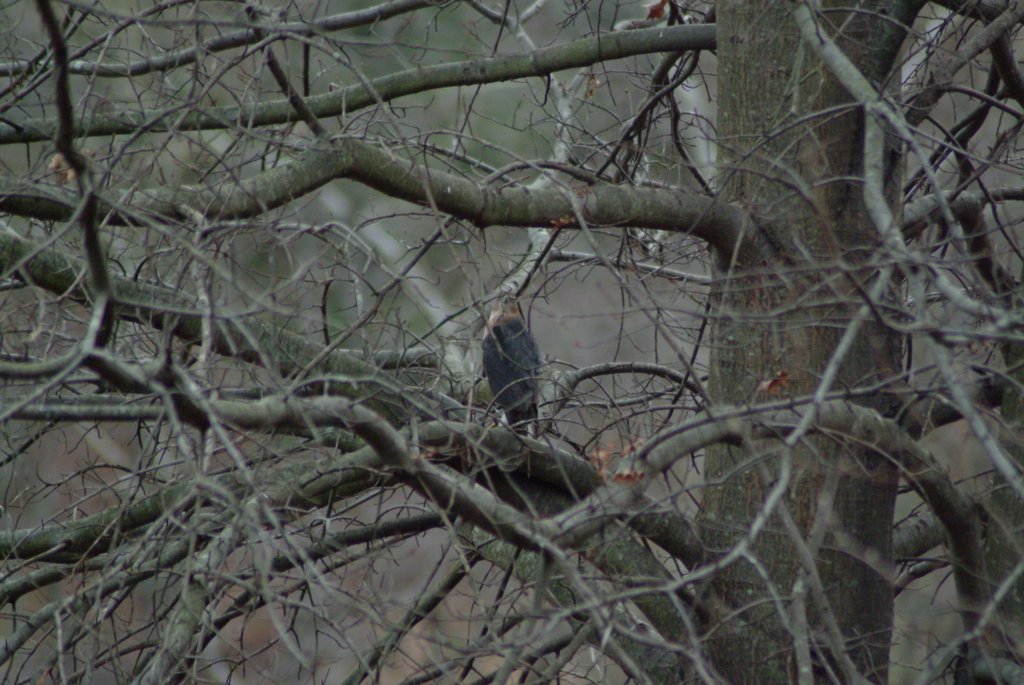
Other hawks in the Habitat (Red-tailed Hawks and Red-shouldered Hawks) are interested in a variety of prey, including chipmunks. However, the Cooper’s Hawk is interested in one think only – small birds. When he is perched on top of the seed feeder, it is highly likely that he has just missed catching a small bird. But rest assured, this hawk has no interest whatsoever in the seed, just the birds eating the seed.
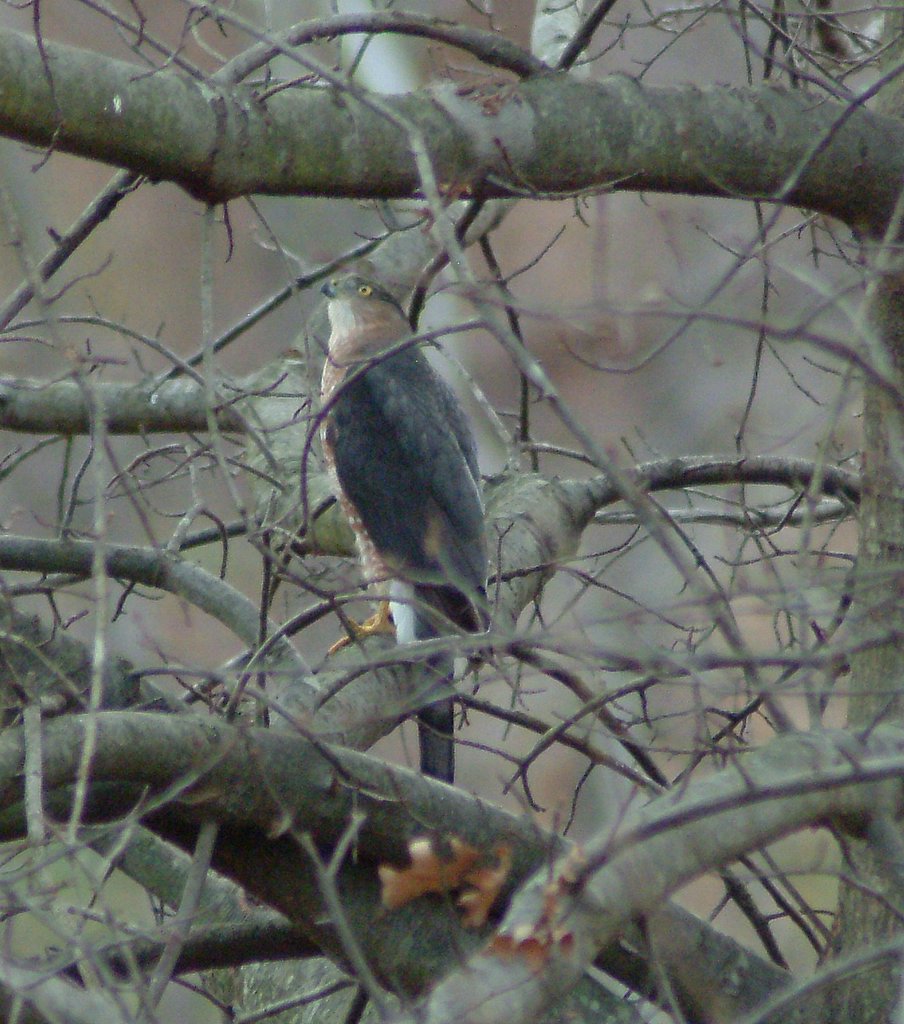
When the hawk was in the oak tree, he allowed me to go out the back door, down the porch steps, and approach the oak tree. I got within 35 feet of the oak before he took off. He returned to perch again in the oak about 15 minutes later, but then left very quickly.
Posted by Picasa

Friday, December 01, 2006

The Fourth Woodpecker Type

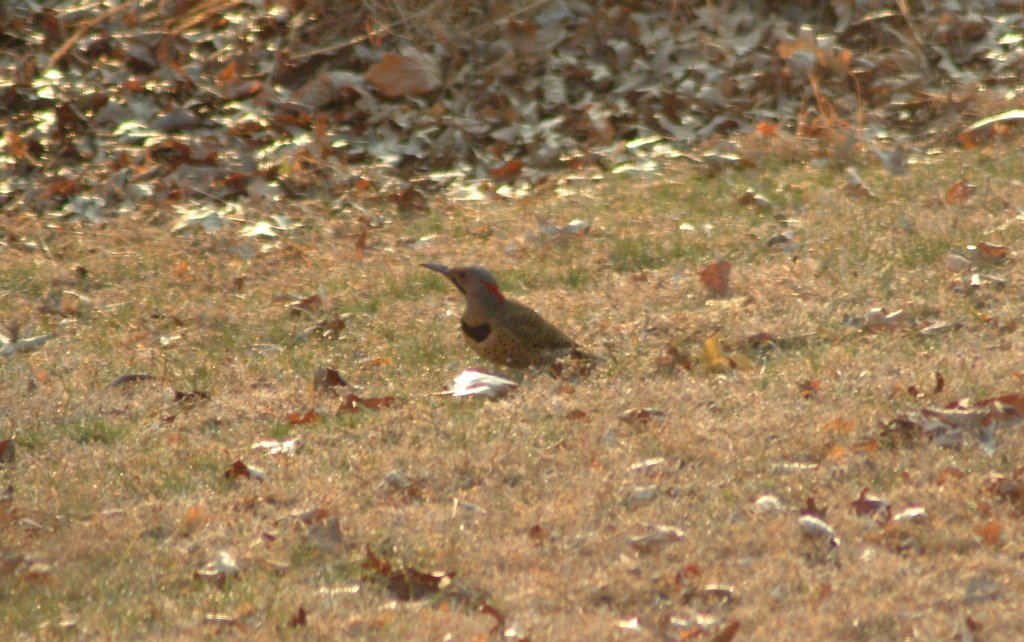
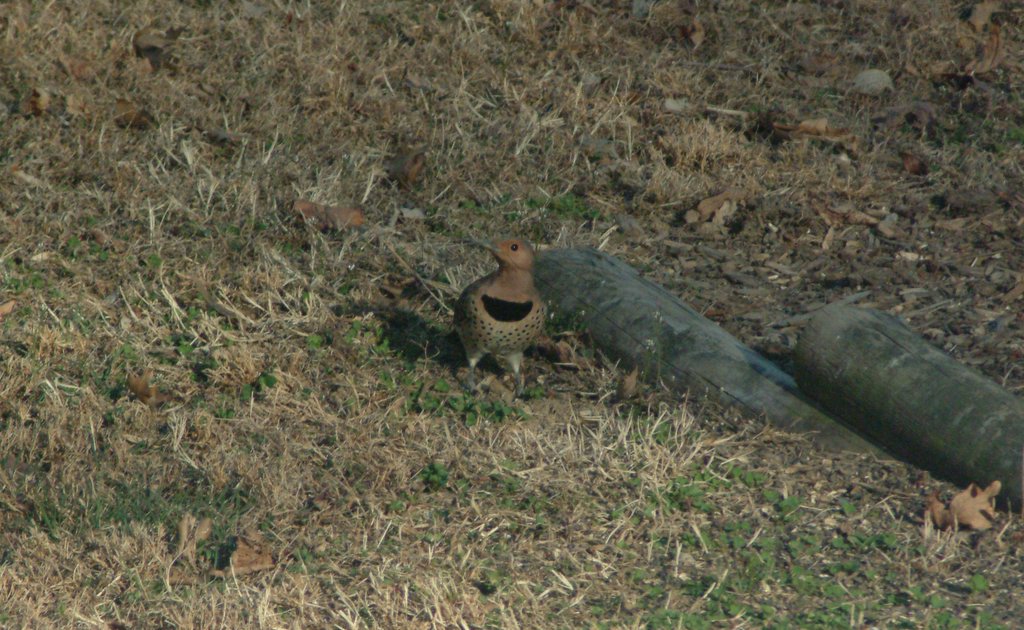
Before the Thanksgiving digressions, I showed photos from visits to the Habitat by a pair of pileated woodpeckers , the many downy woodpeckers, and the red-bellied woodpeckers. That leaves one last woodpecker seen in the Colvin Run Habitat – the Northern Flicker. The northern flickers that appear in the eastern part of North America are the only brown-backed woodpeckers. The flickers are the only woodpeckers in North America that commonly feed on the ground, searching for ants and beetle larvae.

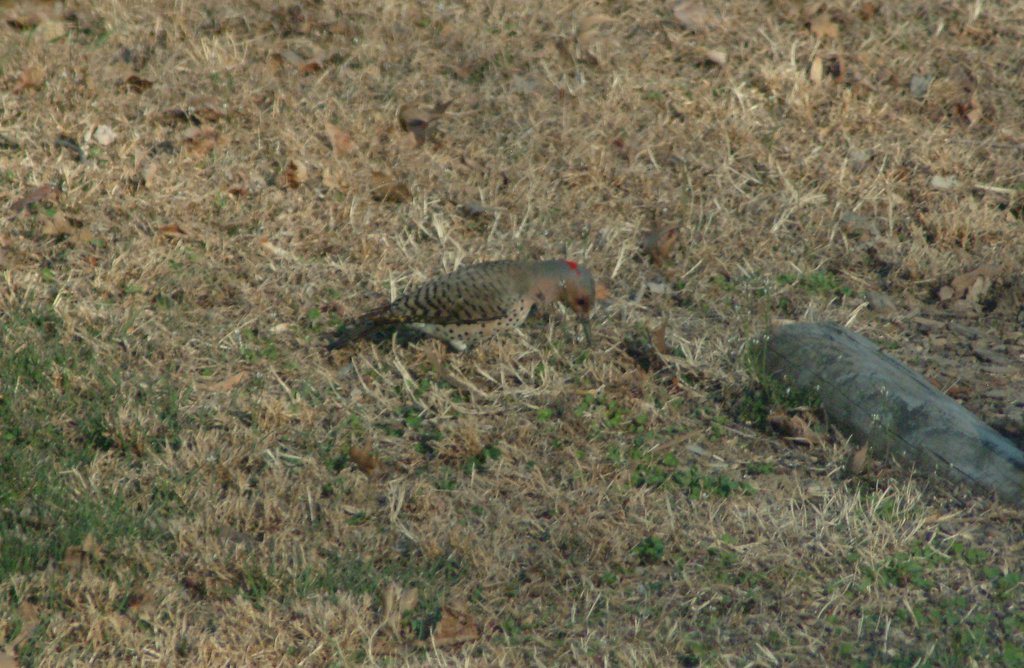
In the first three photos, you can see the flickers on the Habitat lawn. Actually, the arrival of the flickers is a good sign that there are ants and beetle grubs in the lawn, and hence, there is not really much of a lawn.
Like many of the woodpeckers, the flicker has a patch of red on its back. However, I think that the distinguishing feature is the black ‘bib’ on its front.
Often seen on the ground with a robin nearby, the flicker will ‘drill’ the ground much as other woodpeckers ‘drill’ a tree trunk.
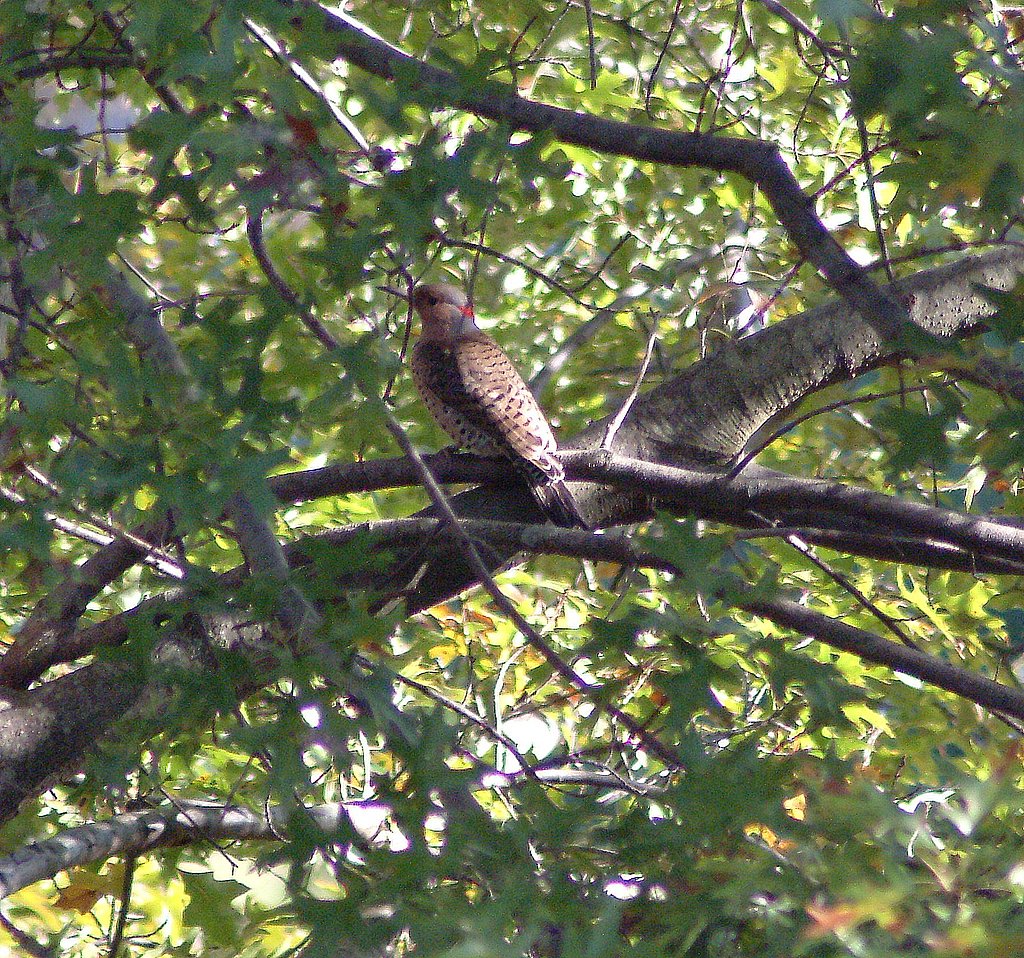
On some occasions, you will find a flicker perched in a tree.
Posted by Picasa

Monday, November 27, 2006

Raccoon Spotted – No Photos

Last night, I took our visiting dog to the front lawn at about 10 PM. While standing on the front lawn, I heard a rustling on the side of the house. The side is dominated by low shrubs; at the intersection of front lawn and side is a small stand of 8 mature maple, oak, and dogwood trees. As the rustling grew louder, a gray animal came out of the shrubs, and then walked to and climb the first available tree. At about 20 feet up the tree, the animal turned and showed his black mask – no doubt this was a raccoon. He then turned around and continued his climb. I quickly grabbed the camera from inside the house, took some flash photos hoping to capture the raccoon even though I could not see him, but, got nothing.

I have long guessed, but had no evidence, that there are nocturnal animals in the Habitat – raccoons being high on the probable list. As you know, I have observed lots of different animals in the Habitat, but I have to admit that this raccoon was unnerving – he clearly saw me and the little dog, but just continued to go his way. All of the other animals in the Habitat, when approached or when they see me make a quick retreat. This raccoon though appeared to have a mind of his own.

I’ll see if I can get some photos, but that will clearly be a challenge.

Sunday, November 26, 2006

New Squirrel Chaser in Town

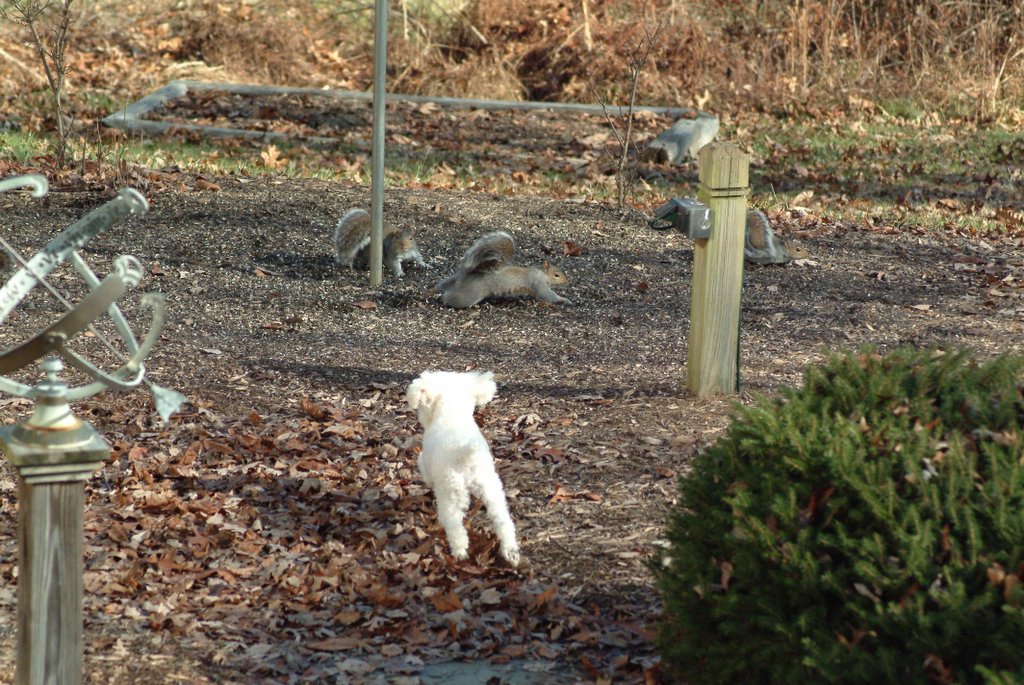
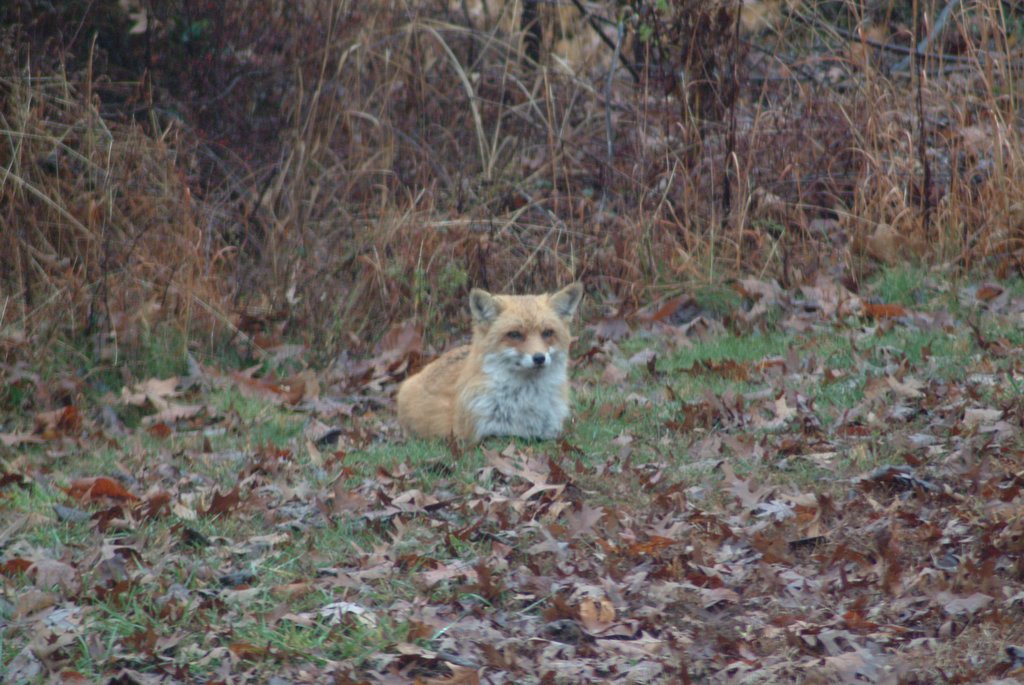
Stories and photos about the premier squirrel chaser in the Colvin Run Habitat – the Red Fox – are frequent in this blog. Well, a new squirrel chaser has come to town. Visiting the Habitat for the Thanksgiving and Christmas holidays is a toy poodle (who goes by the name of LuLu). Barely larger than any of the Habitat’s gray squirrels, this little dog loves to chase the squirrels.

Please do not worry; she is not able to catch them. And, while the squirrels run when she appears, I suspect that even the squirrels are thinking, “should she be chasing us, or should we be chasing her?”

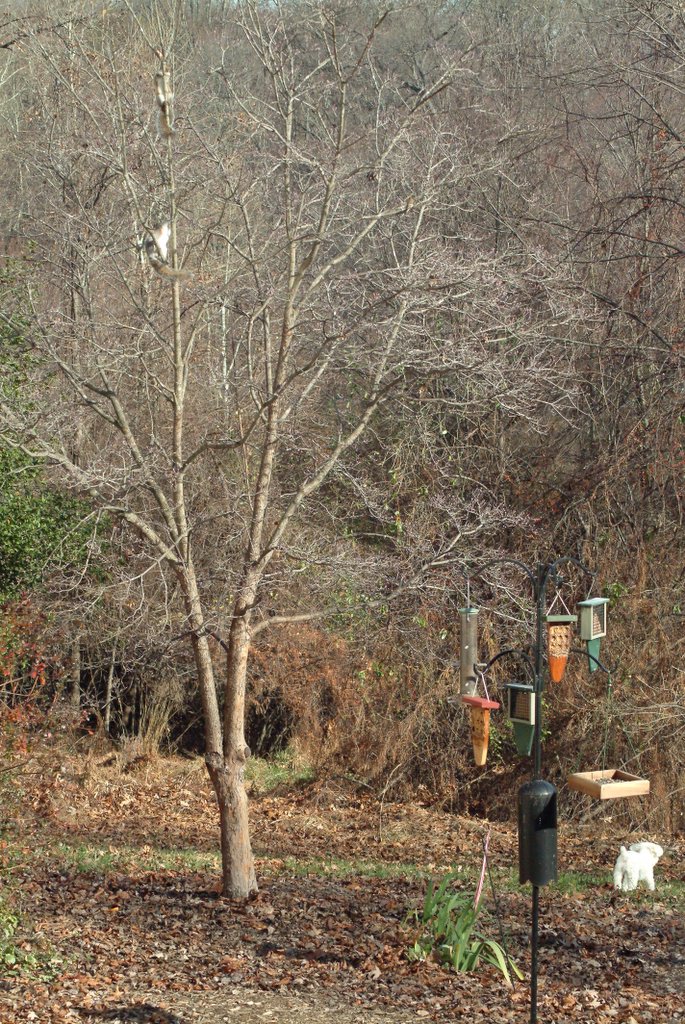
Just as when they are chased by the fox, the squirrels head for the nearest tree, typically the well photographed Dogwood. Unlike the fox, this little dog is not interested in the squirrels once they are up the tree. Also, unlike with the fox, the squirrels are a bit bolder in their behavior with this dog. As soon as the dog is 10 feet from the tree, the squirrels will jump from about 12 feet up (wow, have we seen some interesting jumps and landings) and take off running for another more comfortable tree. In the second photo, she has chased two squirrels up the tree.

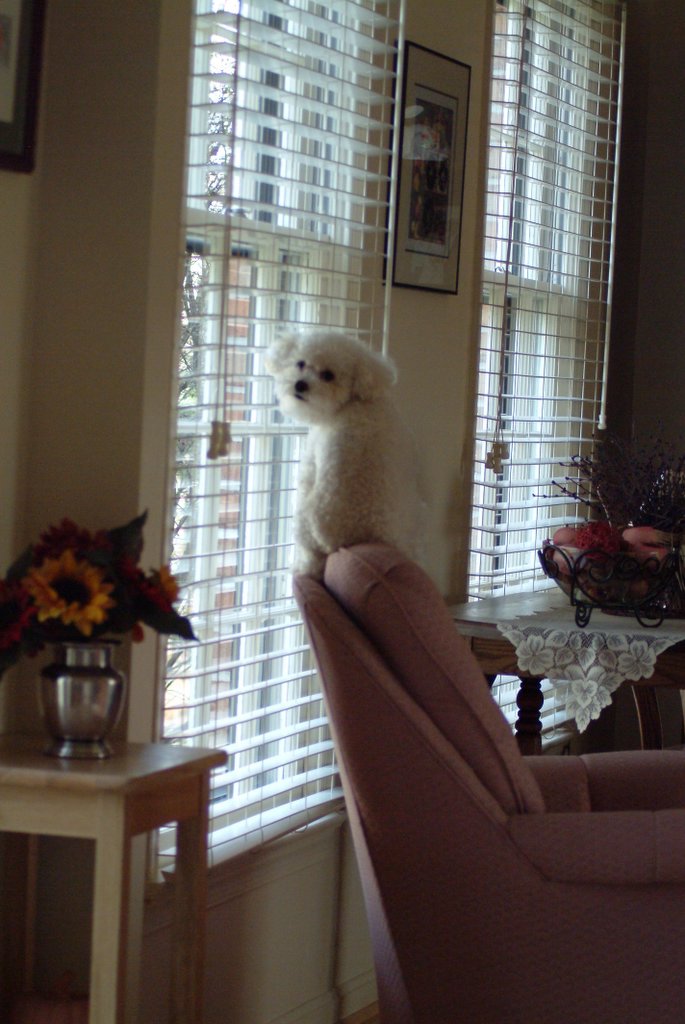
When not actually out chasing the squirrels, the toy poodle keeps watch at the top of the living room chair or naps on the sofa.


And, yes, as soon as the dog is back in the house, the squirrels are back eating sunflower seeds dropped by the ground. Posted by Picasa

Thursday, November 23, 2006

Happy Thanksgiving

At the Colvin Run Habitat and throughout the United States, today is Thanksgiving, a day to give thanks originally established by Abraham Lincoln in 1863. It is also a day of traditional meals and visits from friends and family. In the Habitat, and as host of this year’s feast, I ensured that the feeders were full and I will put some fruit out later. Of course, my wife and daughter will prepare the feast served to us humans in the Habitat.
In keeping with the day, the Habitat’s fox arrived to be seen by guests, well at least those willing to get up early (he arrived at 7:00 AM). He stayed in the brush in his traditional spot for a while, prepared to make a run at a pair of doves, and then simply laid down on the lawn. From this position, he looked around as if watching a Thanksgiving Day parade and actually napped for a few minutes. I hope he will return for the guests who arrive later for the Thanksgiving Feast.

From all the blogging and non-blogging animals at the Colvin Run Habitat, Happy Thanksgiving.


Afternoon Update: The fox was a great Thanksgiving visitor. He made two more appearances while the Thanksgiving guests were here. And, he put on two shows - starting from his position in the brush, he made two runs after the squirrels - chasing one up the pear tree and another up the holly tree. Everyone, including the squirrels, but not the fox, was thrilled that the squirrels were faster today.


Posted by Picasa

Wednesday, November 22, 2006

Still More Woodpeckers - The Red-Bellied

Okay, we discussed visits to the Habitat by a pair of pileated woodpeckers and many downy woodpeckers. So, let’s talk about the Red-Bellied Woodpecker.

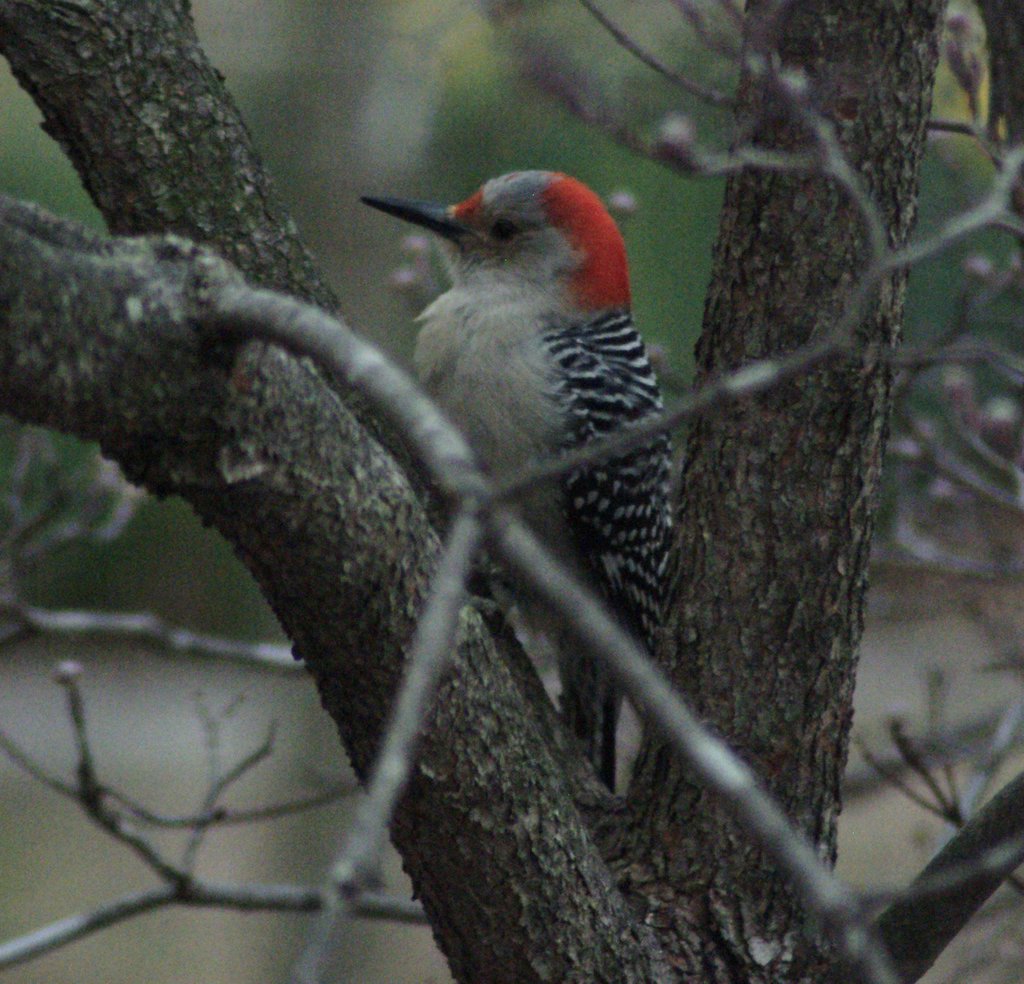
This was the first woodpecker to be seen on a continuing basis in the Habitat. This first photo shows the red-bellied in his classic front-facing-tree-front pose. This woodpecker enjoys moving side to side around a tree trunk, which gives the impression that he is playing hide and seek.

The second photo offers proof that his woodpecker also will perch on a branch (a habit that we have seen with the downy and the flicker also).

For a long time, only males were seen. The males (seen in the first two photos) have a completely red head. The female, shown in the third photo, is similar to the male, except that she has a gray patch on the top of her head.

The fourth photo shows that the red-bellied woodpecker in deed does have a red belly. As noted at http://www.enature.com/home//, their “reddish patch on lower abdomen is seldom visible in the field.” In addition to frequently visiting the suet feeder, they will occasionally visit the sunflower seed feeder.
Posted by Picasa

Tuesday, November 21, 2006

More Woodpeckers - The Downy

First, an update. The pileated woodpecker that was seen for the first time in the immediate Habitat area, was seen a second time. This is a great sign as we might continue to see them in the Habitat.

Second, more woodpeckers. In addition to the pileated, there are three kinds of woodpeckers that are common in the Habitat. By far the most common, one that you will see every few hours, is the Downy Woodpecker. In fact, in a previous post, I showed you a photo of one downy woodpecker just hanging on a porch window. In that post, I also showed you some traditional photos of the downy.

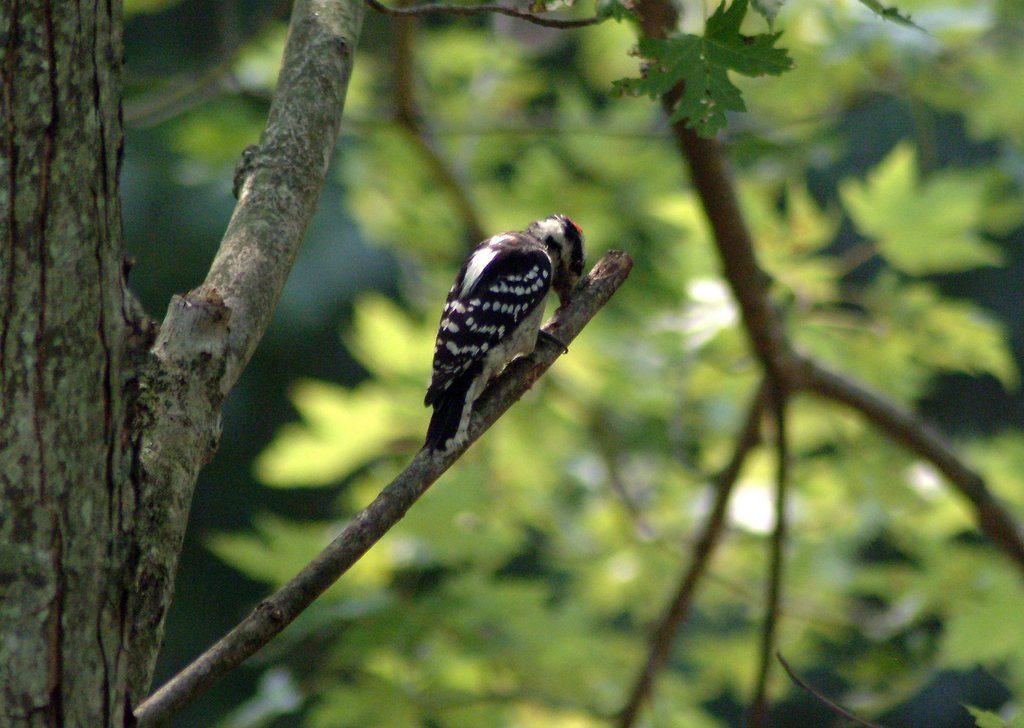
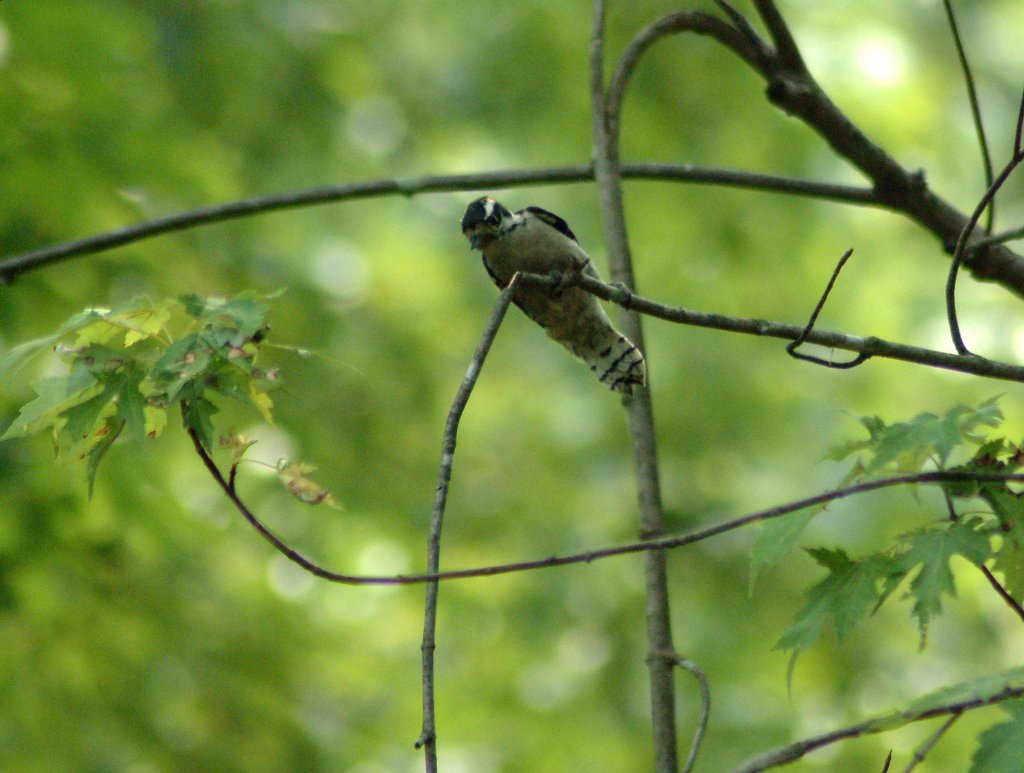
Here are four more photos, which are not the normal photo of a woodpecker with his back facing you and him hanging on a tree truck. (actually, the most common photo that I have of a downy is feeding at the suet feeder.) In the first photo, the downy is on a branch doing what he does best – extracting insects. This is a male as he has the red patch on the back of his head.

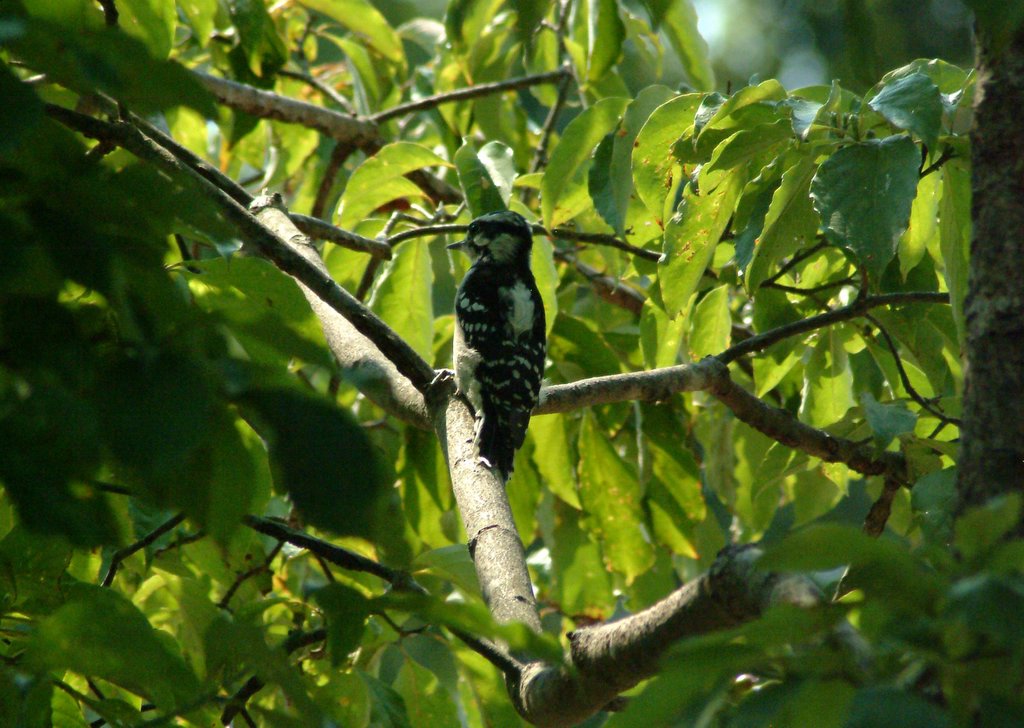
The second photo shows a female (no red patch) sitting on a branch. The third photo shows an interesting pose – one in which you can see the front, including the front tail feathers.

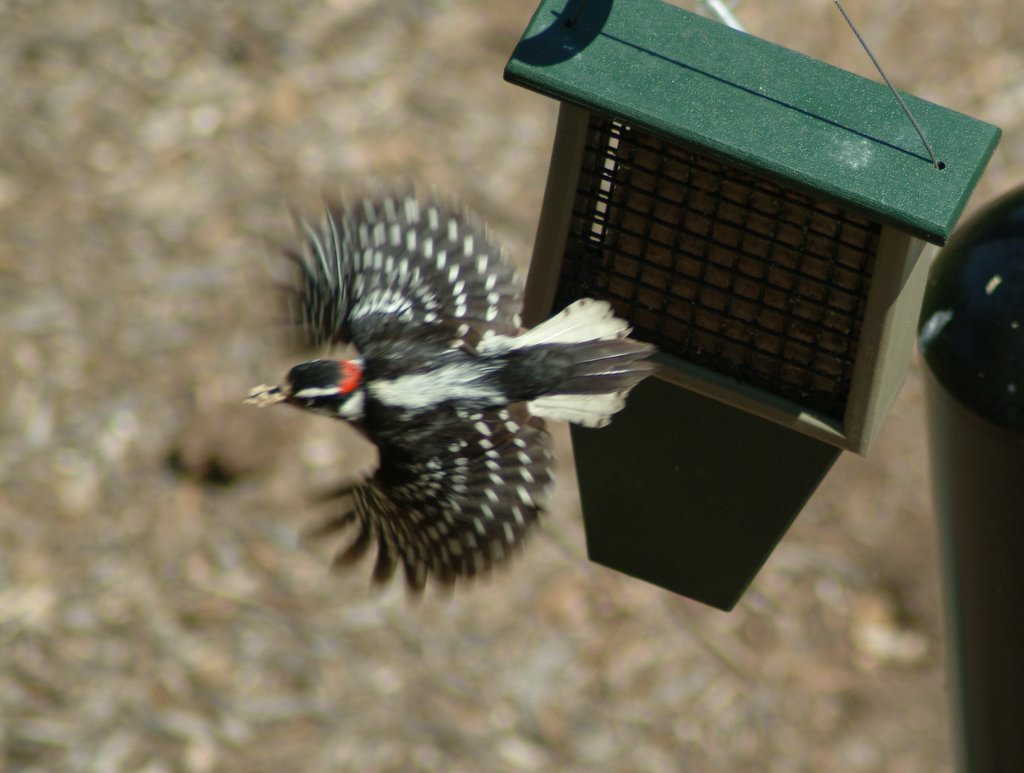
The fourth photo shows a downy in flight (leaving the suet feeder).

Still more woodpeckers in the next post. Posted by Picasa