Sunday, December 24, 2006

A Little Christmas Fun in the Habitat

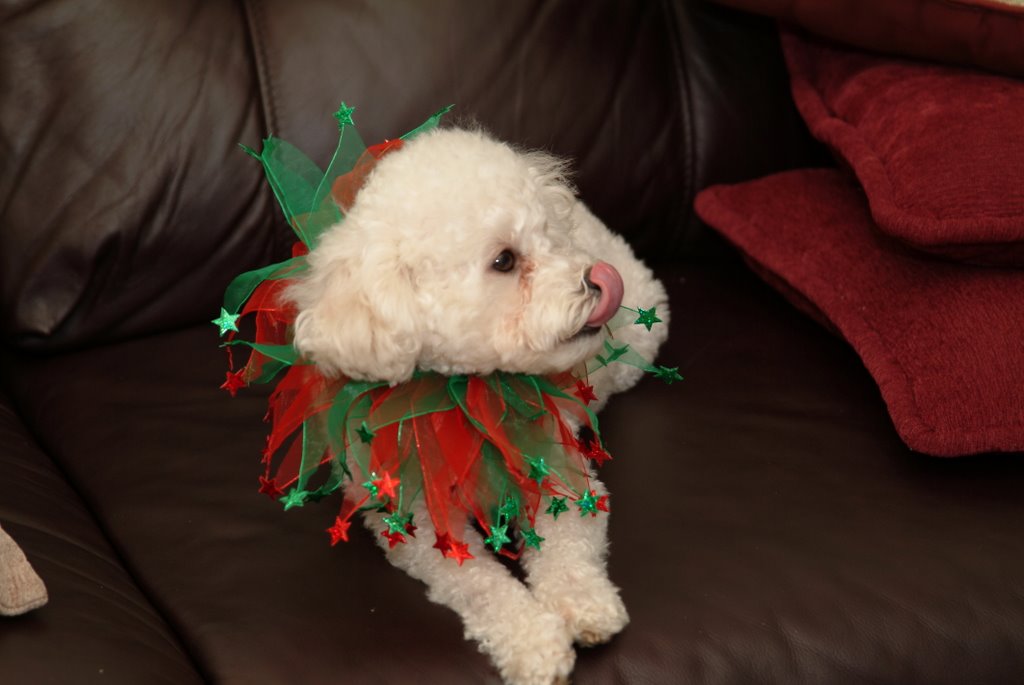
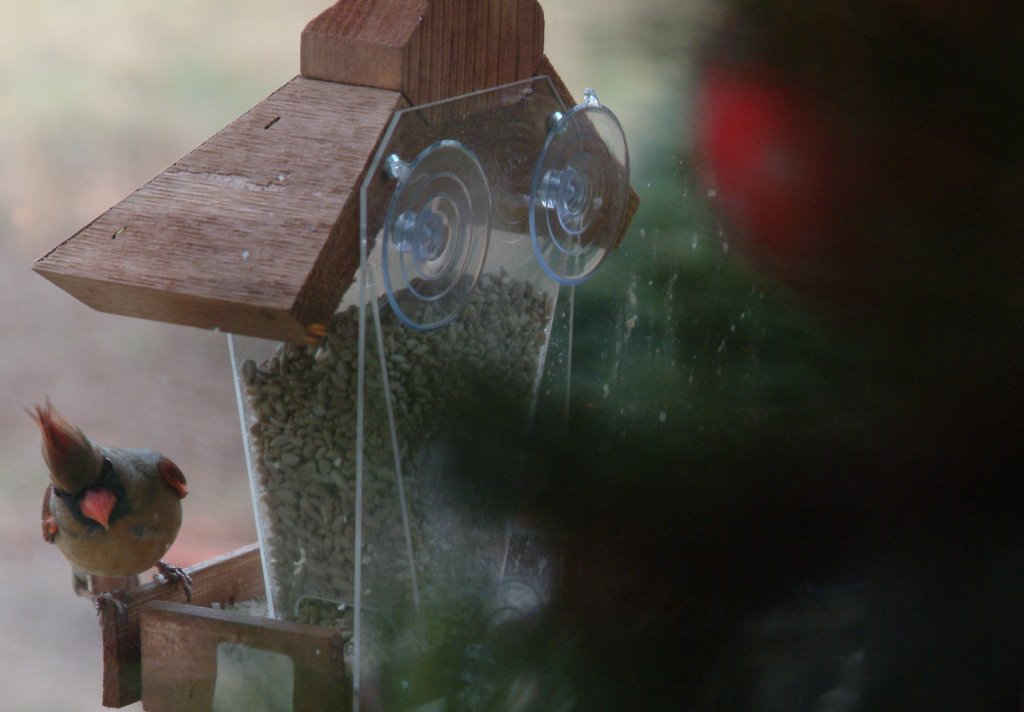
I asked two of the Habitat’s animals to pose for a Christmas picture.
In this first photo, the famous squirrel chaser was captured in her ‘gay apparel’ after eating a Christmas cookie.

In the second photo, I asked one of the cardinals to have her picture taken in front of the Christmas tree. This is the best I could do at getting the cardinal and the tree together (note the red ornament from on the tree). The window bird feeder and the Christmas tree are separated only by a pane of glass.
Posted by Picasa

Unsettled Mornings

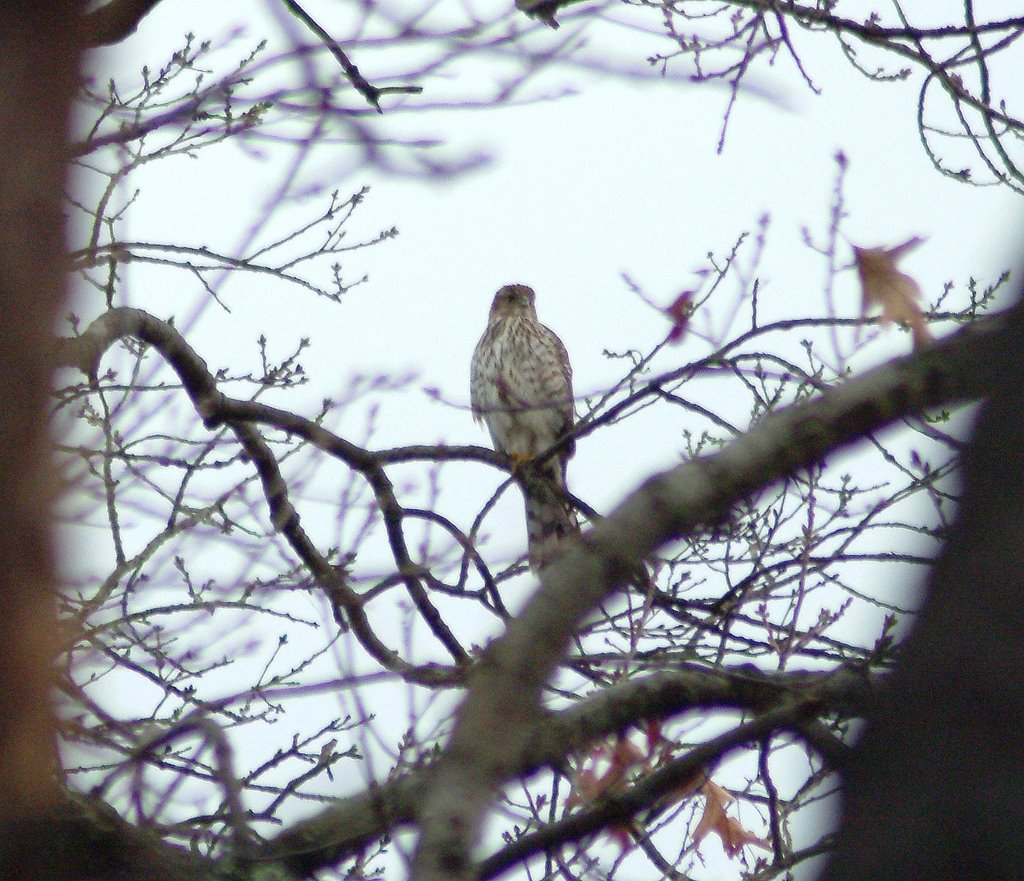
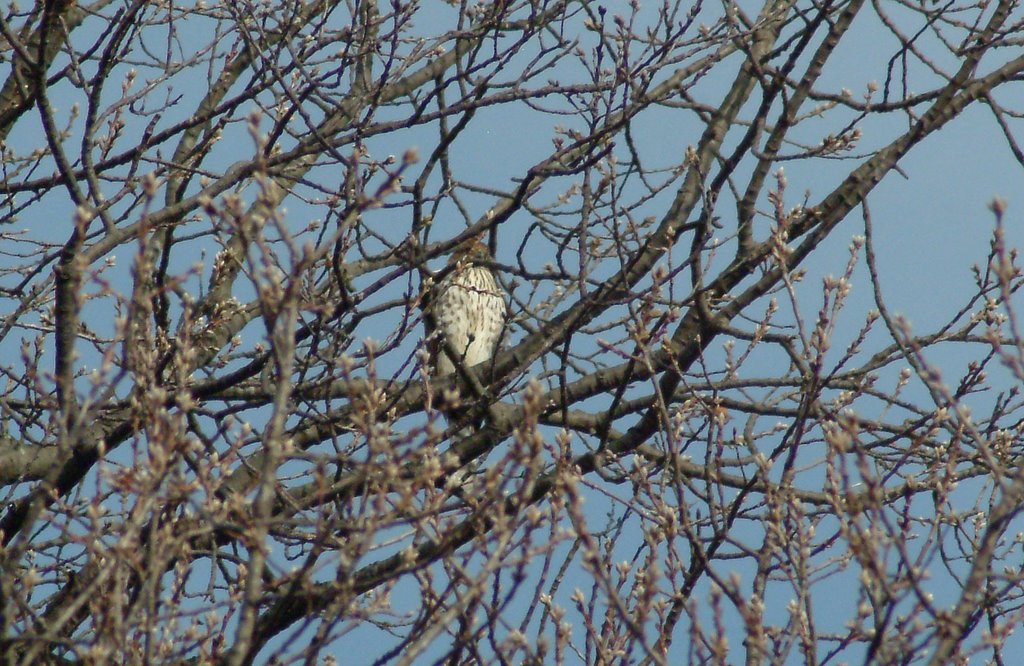
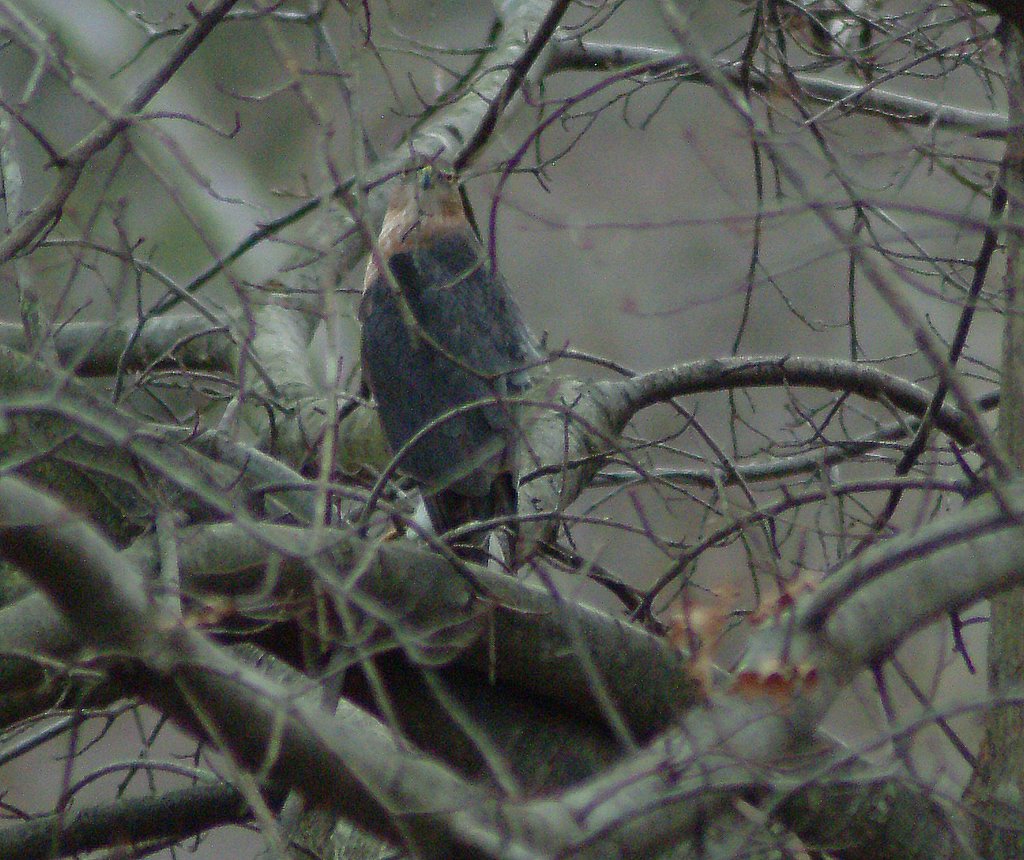
The last two mornings at the bird feeders have been quite unsettling if you are a normal small bird feeder. The reason? This hawk has taken up a perch in the tall oaks overlooking the Habitat on the north side.

Yesterday, morning the crows eventually encouraged him to leave. As a result, I have confirmation that he is crow-sized, which will, I believe, confirm that he is a Cooper's Hawk. Additionally, this visitor had a relatively long tail, a trait of the Cooper's and Sharp-Shinned Hawks (that former crow-sized, the later jay-sized).

I find that the hawks are easily moved, regardless of how high they are in the trees (they were at least 50' up in the trees yesterday and today). The telltale sign that the hawk is perched in the Habitat is that all of the smaller, song birds, and even the squirrels, are nowhere to be seen. As soon as the hawk leaves, they come out and continue to feed.

Eventually, I will get a raptor-expert to confirm the various types of hawks that have been observed in the Habitat. Posted by Picasa

Christmas Eve Miracle

In a recent post, I mentioned that I was concerned that the Habitat's signature red-tailed fox was the victim of the nearby four-lane highway. Apparently, I was wrong. Although some poor fox was killed, it was not our fox.

This morning about 8 AM, he walked through the Habitat and entered the brush where he normally sits and observes the squirrels. Dot made the observation and reports that he appeared to be in good health with a dark, reddish, winter coat. He was in no hurry, he simply strolled through.

Dot suggests that he is truly family - he shows up only for the holidays - his last visit was Thanksgiving.

I was late getting the camera so I have no photos. We are keeping watch (like the shepherds of old) this Christmas Eve to see if he re-appears to take his normal observation throne.

Wednesday, December 13, 2006

Christmas Card Pose

An increasingly popular Christmas card captures the various member of the family. This is an especially great way to show friends and family how the kids have grown over the last year. Well, here is the first of my Christmas cards from the Colvin Run Habitat with many of the family shown.

Actually, this is a great time for backyard birding as the bare trees provides a great view of the birds and there are large numbers and varieties always just hanging around.

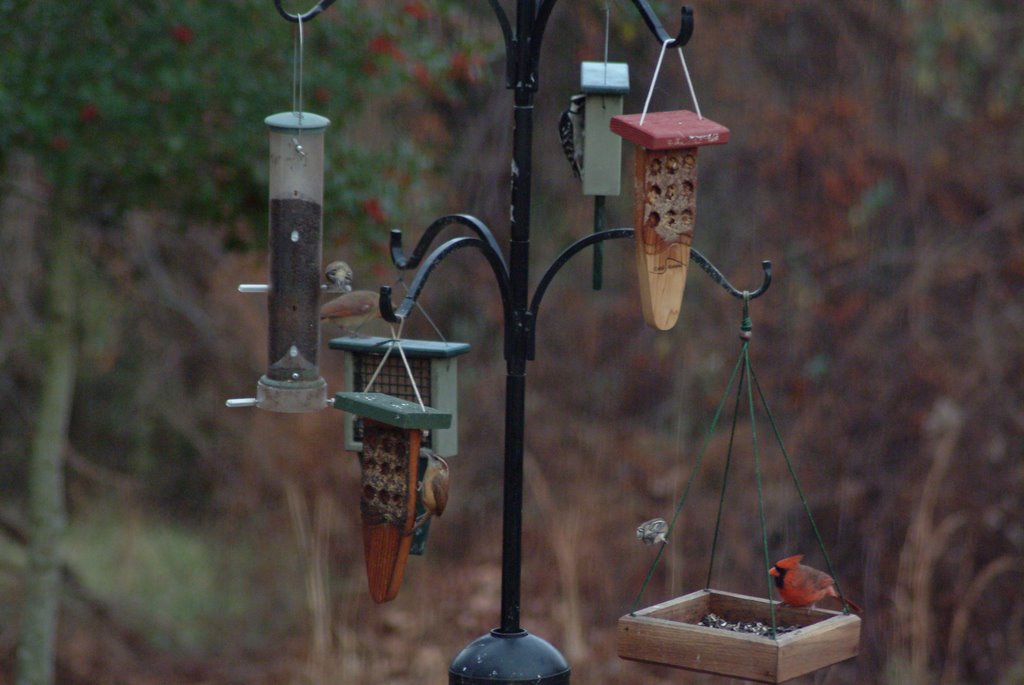
In this shot, we have a male and female pair of cardinals, an American goldfinch (in winter olive garb) at the tube feeder, a female downy woodpecker at the suet feeder, and a wren at the peanut butter feeder. Then there is a bird hanging on the strings to the tray feeder - this is the back end view of a white-breasted nuthatch.

Anyway, I thought you would enjoy this holiday buffet of Habitat birds.

On a sadder note, I wrote about the show that the fox put on for all of the human visitors on Thanksgiving Day. I am sad to say that he has not been seen since (about three weeks now). I am even sadder to say that animals (especially deer) are often killed on the 4 lane road near the Habitat and that a fox is one of the recent victims. There is no way to verify that he is one of the summer's Habitat residents, but I am concerned given the close location. I'll report to you as soon as he returns to his throne in the Habitat bush. Posted by Picasa

Sunday, December 03, 2006

Red-winged Blackbird Visits

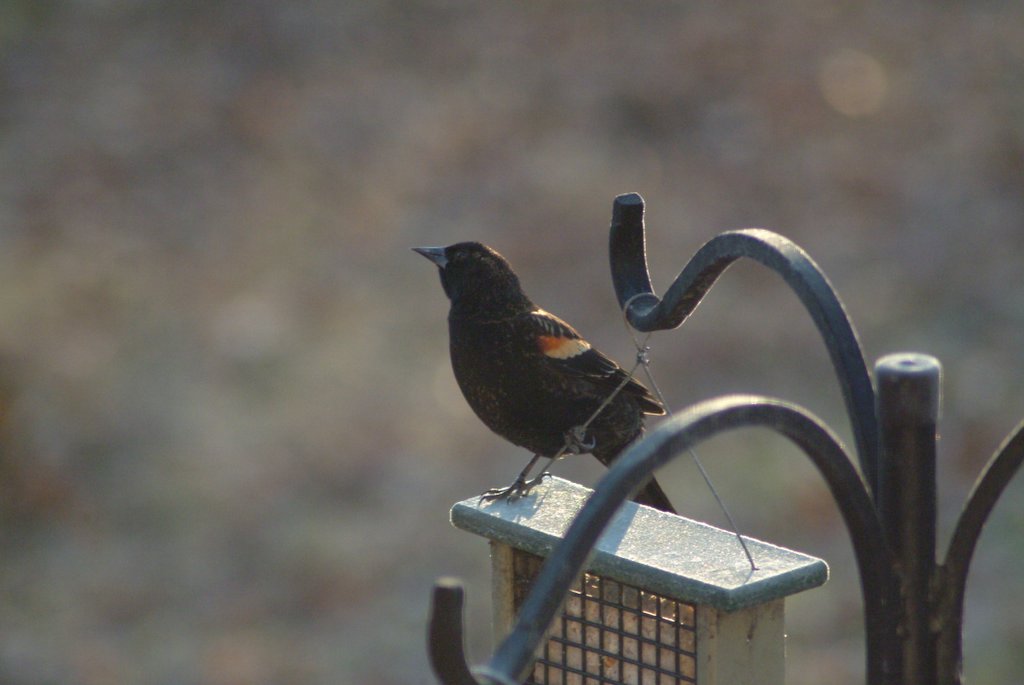
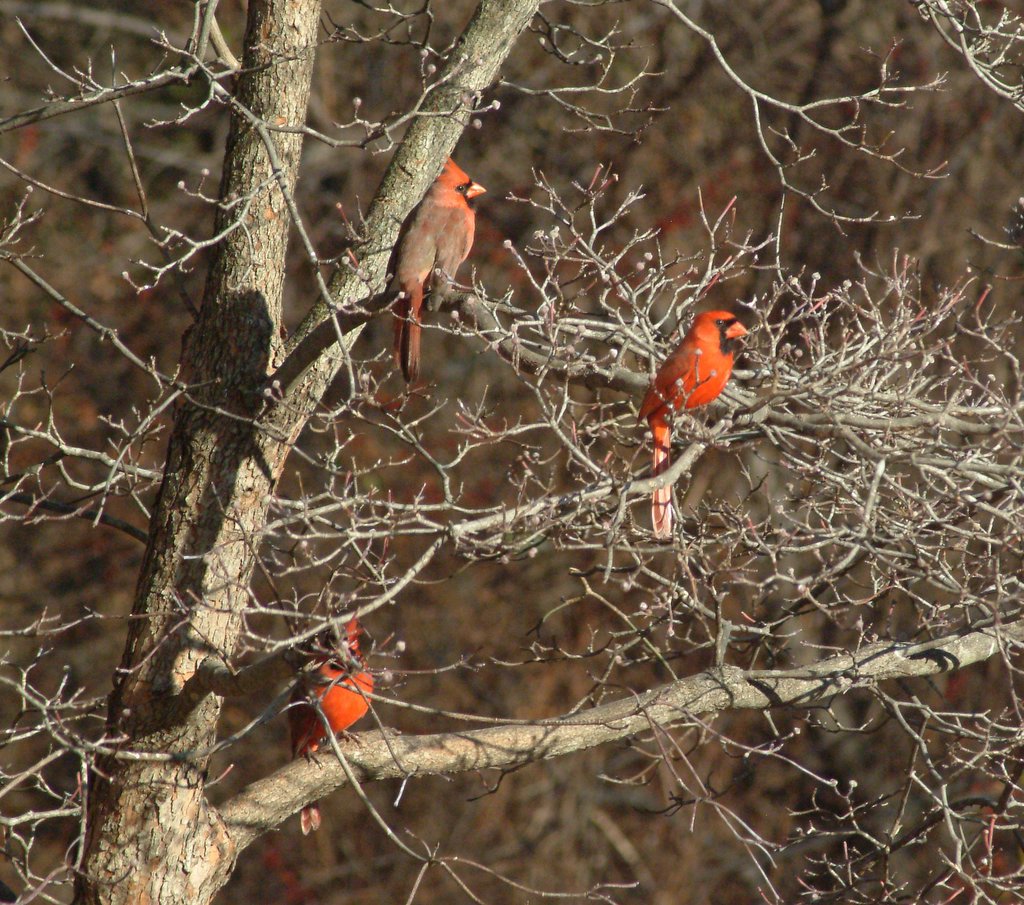
The Cornell Ornithology websites says that the Red-Winged Blackbird is one of the most abundant birds in North America. Unfortunately, the red-winged blackbird has only been observed in the Colvin Run Habitat only twice in the last year – May 20th and today, December 3rd. Too bad, as the male red-winged blackbird has striking marks on its wings – the markings stand brilliant against the rest of its all black body. The female is so drab that it can be mistaken for a large sparrow.

The first photo is today’s red-winged visitor. Note the small amounts of brown speckles in its body – leading me to believe that the guy was hatched this past spring.

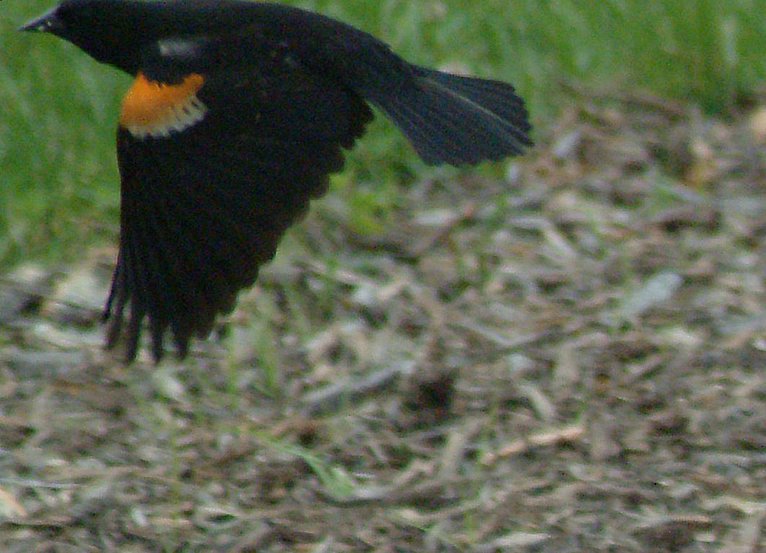
The second photo is from the May visitor. Pardon the poor photo quality, but I wanted to show you the red-winged blackbird in flight when you can really see the wing markings. Of course, I always think that this bids marking are orange and not red. I know that this guy has been around for the last week or so as I have heard a new bird call, previously unknown to me. After seeing him today and checking his call on line, it is clear that I have heard him for the last week.

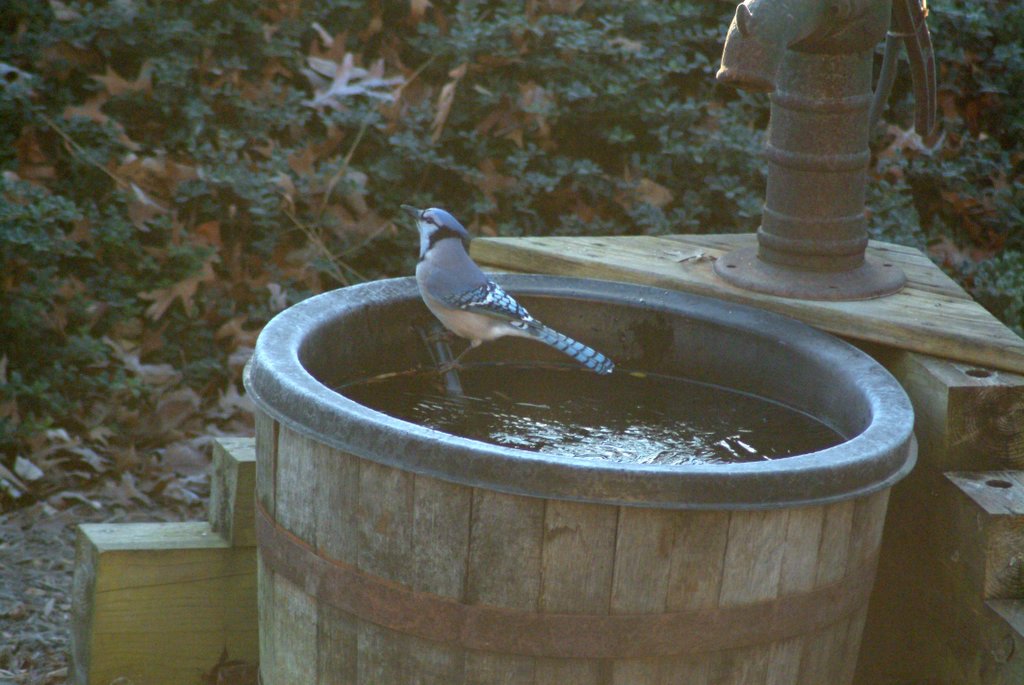
All in all, the fall in the Habitat has been quite mild. As you can see from the third photo, the blue jay was not real pleased that the water tub was frozen over this morning. I guess that it is time to get out the bird bath feeder (talk about decadence).

A few posts ago, I showed you the pair of pileated woodpeckers that were photographed in the Habitat. I saw one of them in the Habitat once in the two days after that post, but not since. This is really not all that uncommon – as I explained previously – the pileated woodpeckers are quite shy. I often hear their hammering on tree trunks – their drumming echo throughout the woods adjacent to the Habitat. This morning, I heard yet another bird call that is not common in the Habitat. As I was unable to see any bird for this very distinct call, I checked the call on-line. Sure enough it was the pileated woodpecker. Click here for a web page that has audio of their call (you’ll need to scroll down the page and click again). The pileated woodpecker’s drumming can be heard at the end of this audio recording.

The Habitat is an amazing collection (in number and variety) of birds right now. The just hang out and eat seed and suet – in fact, I am going through see faster now than during the summer. Considerable numbers are roosting in the azaleas and other bushes in the Habitat. The fourth photo is a group of male cardinals enjoying the sun this afternoon.

Quick update: the fox has not been back since Thanksgiving Day and the raccoon has not been seen again since the other night. Posted by Picasa

Saturday, December 02, 2006

Cooper’s Hawk Visits the Habitat

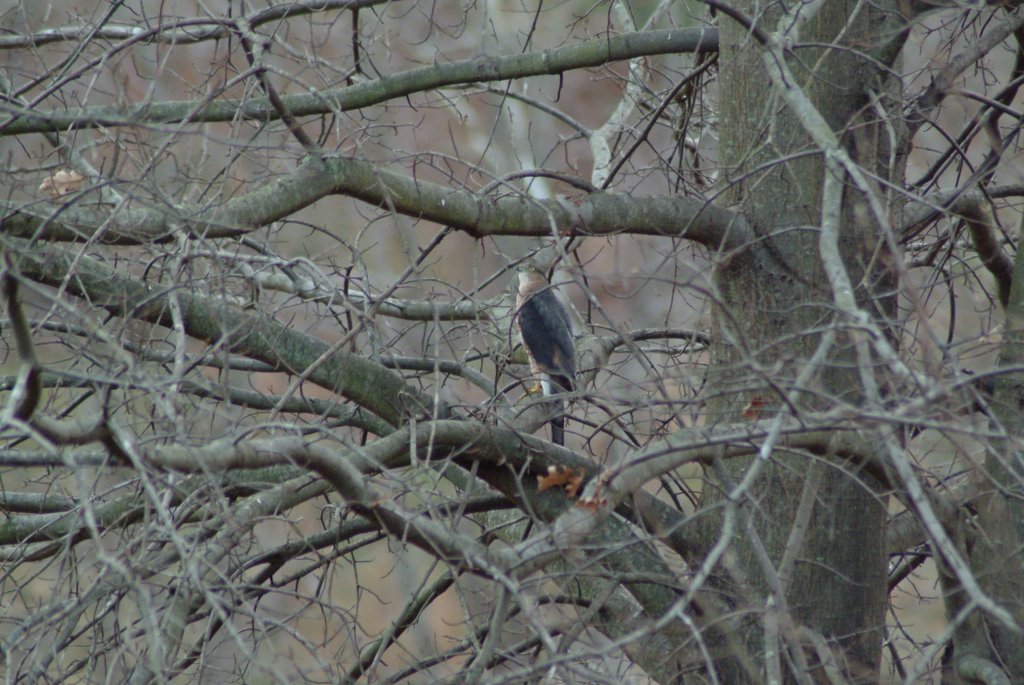
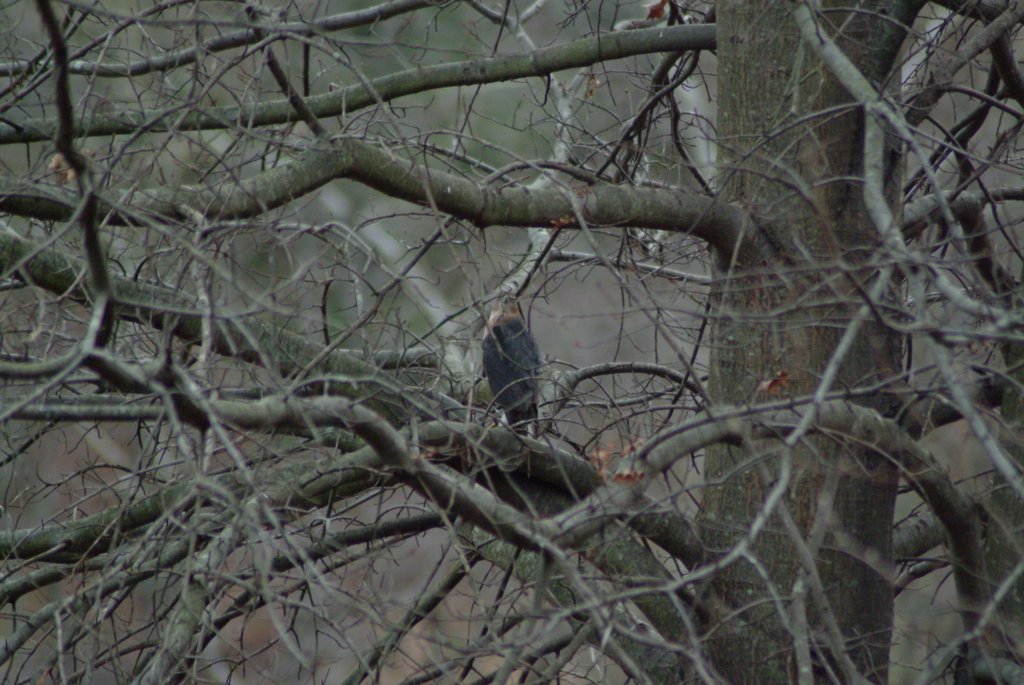
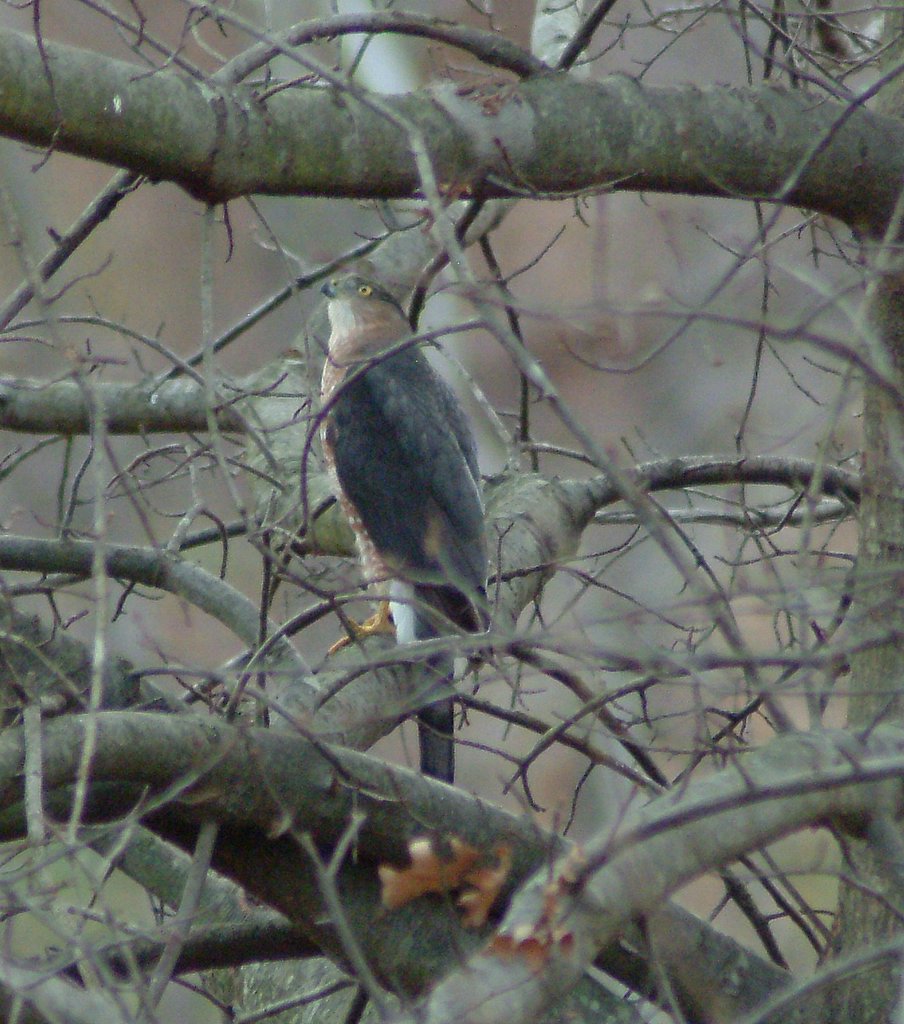
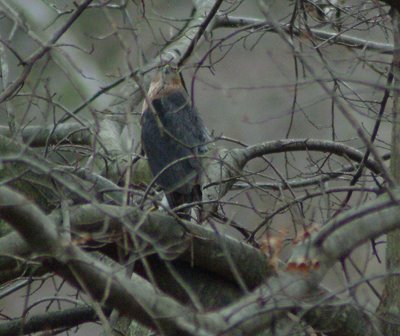
An exciting day – one of the hawks that I was previously unable to photograph showed up in the Habitat yesterday. In that previous post, I mentioned that the hawk perched on top of the feeder pole and was most likely a Cooper’s Hawk. Today, we first spotted him again perched on top of the sunflower seed feeder. And, there is no doubt that he is a Cooper’s Hawk (he was clearly crow sized, versus blue jay sized Sharp-shinned Hawk)

The hawk quickly left his perch on the feeder and flew 30 feet to the tall oak (as seen in all of these photos.
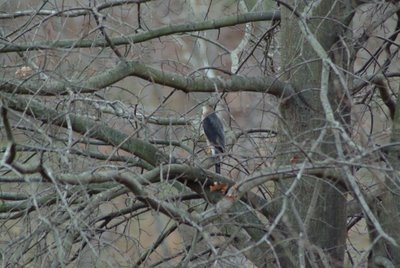

As you can see, the oak tree’s branches are quite dense. And yet, from such dense vegetation, the Cooper’s Hawk launches his attack at his prey. Dashing through this dense vegetation to catch birds is a rather dangerous lifestyle. A recent study found that 23 percent of all Cooper's Hawks examined had healed fractures in the bones of the chest, especially of the furcula or wishbone.
Other hawks in the Habitat (Red-tailed Hawks and Red-shouldered Hawks) are interested in a variety of prey, including chipmunks. However, the Cooper’s Hawk is interested in one think only – small birds. When he is perched on top of the seed feeder, it is highly likely that he has just missed catching a small bird. But rest assured, this hawk has no interest whatsoever in the seed, just the birds eating the seed.
When the hawk was in the oak tree, he allowed me to go out the back door, down the porch steps, and approach the oak tree. I got within 35 feet of the oak before he took off. He returned to perch again in the oak about 15 minutes later, but then left very quickly.
Posted by Picasa

Friday, December 01, 2006

The Fourth Woodpecker Type

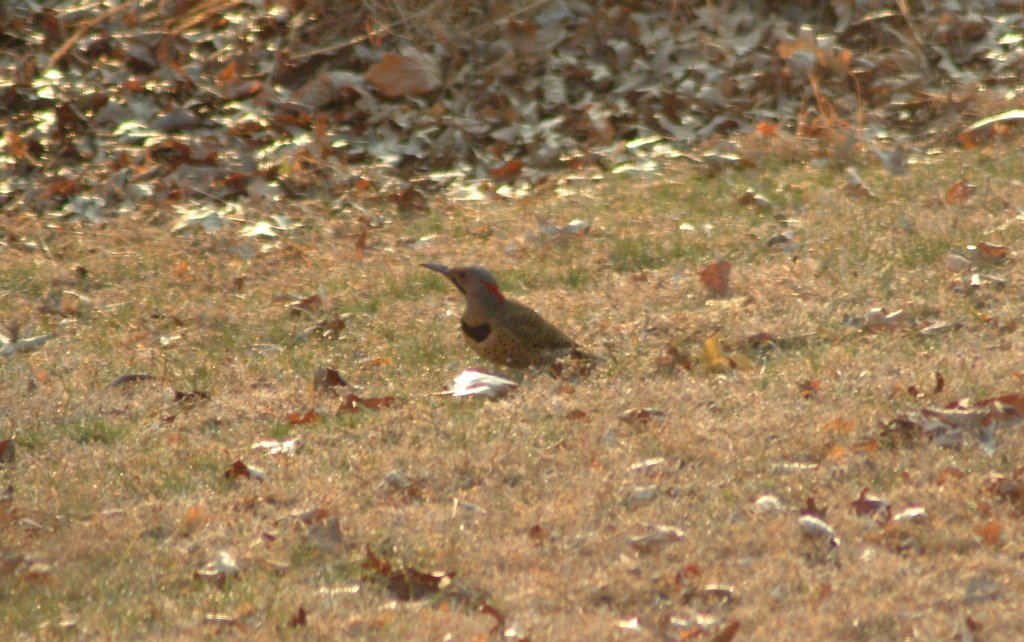
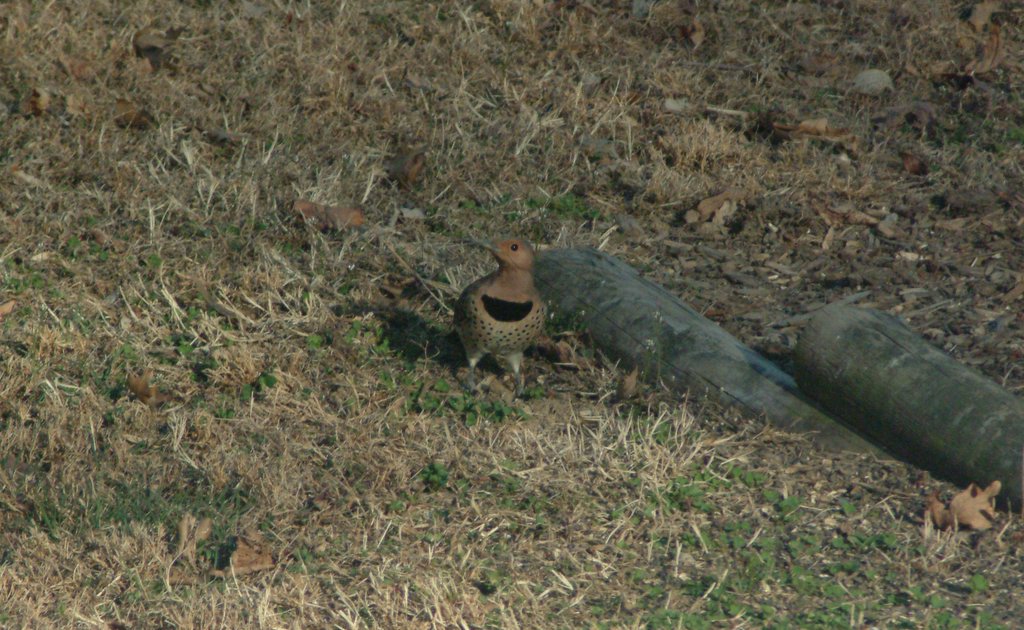
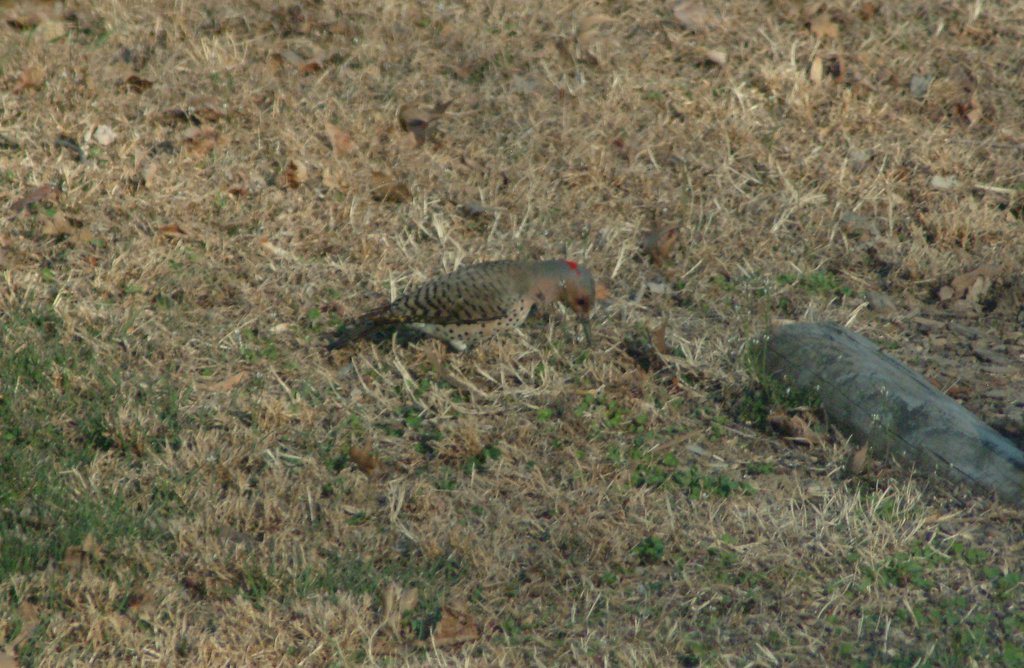
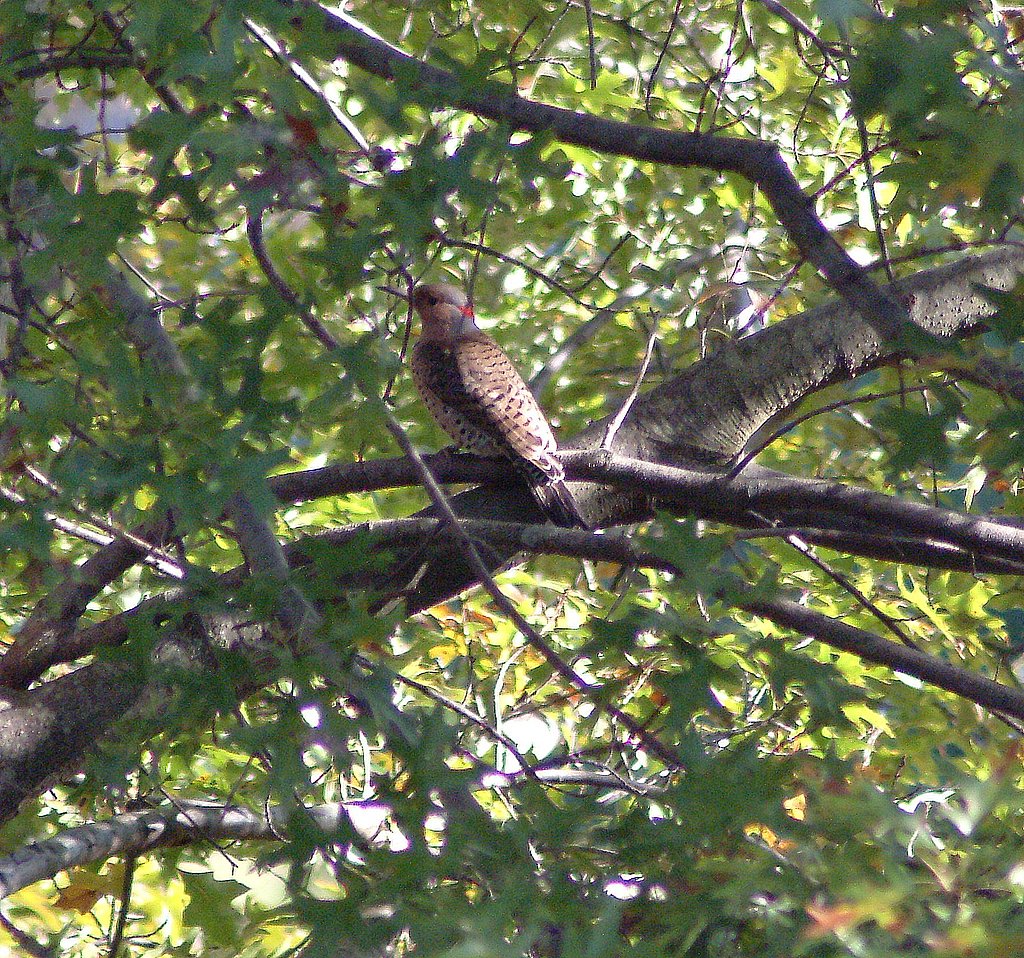
Before the Thanksgiving digressions, I showed photos from visits to the Habitat by a pair of pileated woodpeckers , the many downy woodpeckers, and the red-bellied woodpeckers. That leaves one last woodpecker seen in the Colvin Run Habitat – the Northern Flicker. The northern flickers that appear in the eastern part of North America are the only brown-backed woodpeckers. The flickers are the only woodpeckers in North America that commonly feed on the ground, searching for ants and beetle larvae.

In the first three photos, you can see the flickers on the Habitat lawn. Actually, the arrival of the flickers is a good sign that there are ants and beetle grubs in the lawn, and hence, there is not really much of a lawn.
Like many of the woodpeckers, the flicker has a patch of red on its back. However, I think that the distinguishing feature is the black ‘bib’ on its front.
Often seen on the ground with a robin nearby, the flicker will ‘drill’ the ground much as other woodpeckers ‘drill’ a tree trunk.
On some occasions, you will find a flicker perched in a tree.
Posted by Picasa